Restaurant Business Plan Template: Complete Guide + Free Download 2025

Table of Contents

The Ultimate Restaurant Business Plan Template Guide: Free Downloads & Expert Advice

Restaurant Business Plan Template

by Gemini AI

Starting a restaurant requires more than just a passion for food and hospitality—it demands careful planning, strategic thinking, and a clear roadmap for success. Whether opening a fine dining establishment, a casual eatery, or a food truck, a well-crafted business plan is your foundation for turning culinary dreams into a profitable reality. In today’s competitive and ever-changing restaurant landscape, particularly following the industry disruptions of recent years, having a comprehensive business plan isn’t just helpful—it’s essential. Learn how to create a business plan with AI to streamline your planning process.

1. Why a Restaurant Business Plan Matters

A restaurant business plan serves as your blueprint and compass. It outlines your concept, operational strategy, marketing approach, and financial projections while helping you navigate the complex journey of restaurant ownership. Whether you’re using a Restaurant Business Plan Template or building from scratch, here’s why investing time in creating a thorough business plan is critical:

  • Securing funding: Lenders and investors require detailed business plans before providing capital. A professional, data-backed plan demonstrates your seriousness and preparedness.
  • Clarifying your vision: The process of writing a business plan forces you to refine your concept, identify your unique selling proposition, and articulate what makes your restaurant special.
  • Identifying potential challenges: Researching and planning help you anticipate obstacles before they arise, from competitive pressures to operational inefficiencies.
  • Setting realistic financial expectations: Restaurant profit margins typically range from 3-5%. A business plan with detailed financial projections helps set achievable goals and timelines.
  • Creating an operational roadmap: Your plan becomes a reference guide for daily decisions and long-term strategy, helping keep your team aligned and focused.

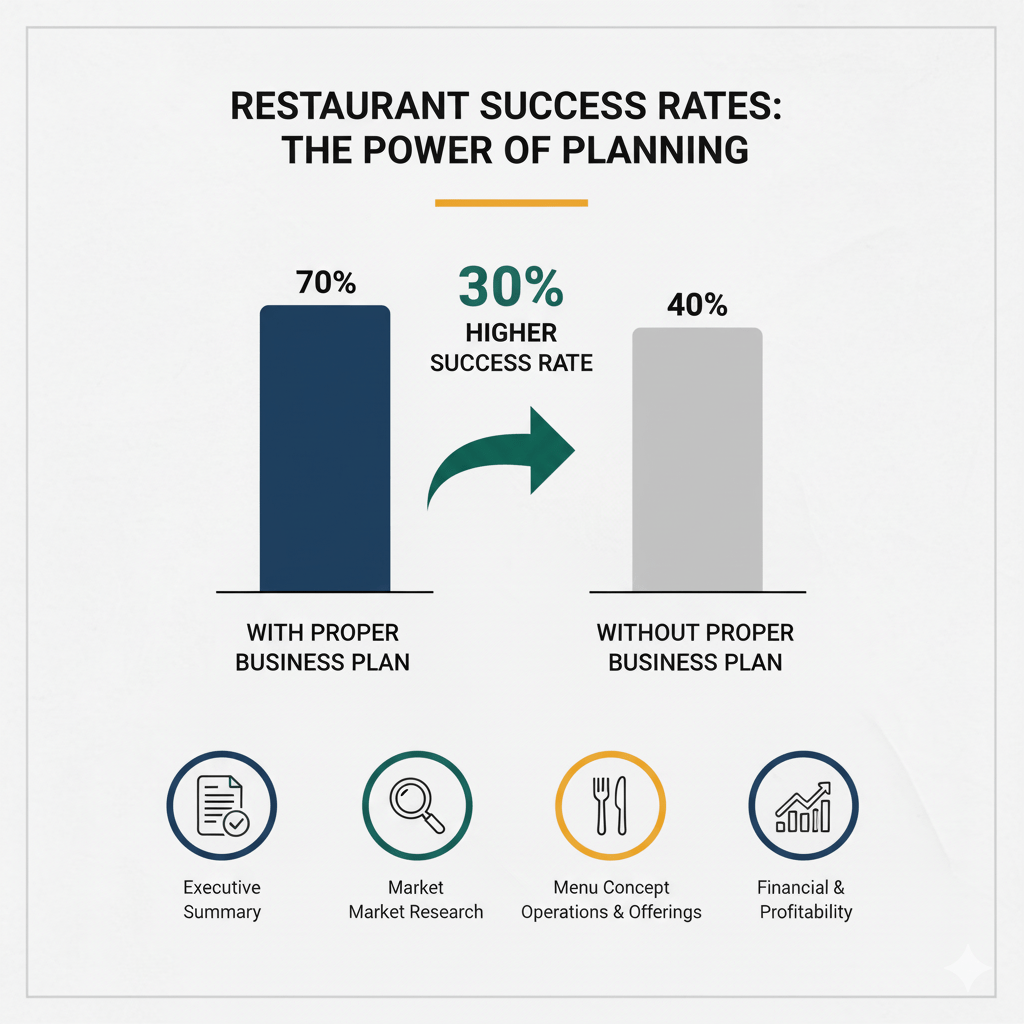
Industry statistics reveal that restaurants with comprehensive business plans are 30% more likely to achieve profitability in their first two years. In an industry where approximately 60% of new restaurants fail within the first year, this planning advantage can distinguish between success and closure.

2. Essential Elements of a Successful Restaurant Business Plan

While templates provide structure, understanding the core components of a restaurant business plan helps you customize your approach. A well-designed Restaurant Business Plan Template can streamline this process and ensure you cover every effective restaurant business plan includes these key elements:

Executive Summary

Though appearing first, this concise overview of your business plan is typically written last. It highlights your concept, target market, competitive advantage, team strengths, and financial overview—all condensed into 1-2 compelling pages that grab investors’ attention.

Company Description

This section details your restaurant concept, legal structure, location strategy, and overall mission. It articulates your restaurant’s “story” and explains why your concept will succeed in your chosen market.

Market Analysis

A data-driven examination of your target market, including demographic analysis, competitor research, and industry trends. This section demonstrates your understanding of the restaurant landscape and identifies your niche.

Menu & Service Description

Beyond just listing dishes, this section outlines your culinary philosophy, pricing strategy, menu psychology, service style, and how these elements align with your target customers’ expectations.

Marketing Strategy

Your plan for attracting and retaining customers, including branding, digital marketing, community engagement, loyalty programs, and promotional calendars with associated costs.

Organizational Structure

Details about management, staffing plans, hiring strategies, training programs, and operational systems that will ensure consistent quality and service.

Financial Projections

The numbers that make or break your plan, including startup costs (typically $175,000-$750,000 for independent restaurants), detailed revenue forecasts, expense budgets, break-even analysis, cash flow projections, and potential return on investment.

business plan template free

3. Restaurant Business Plan Templates by Type

Different restaurant concepts require tailored approaches to business planning. Below, you’ll find specialized templates for various restaurant types in Docx and Pdf formats to suit your preferences.

a. Full-Service Restaurant Template

Full-service restaurants involve higher investment, more complex staffing structures, and detailed service protocols. This comprehensive template addresses the specific challenges of table-service establishments.

Key features:

  • Detailed front-of-house and back-of-house staffing models
  • Table turnover rate calculations
  • Bar program development guidelines
  • Service standards documentation
  • Reservation system integration planning

Download options: Word Template | PDF Example

b. Fast Food Restaurant Template

Fast food concepts prioritize operational efficiency, standardized processes, and volume-based profitability. This template focuses on streamlining systems and maximizing throughput.

Key features:

  • Drive-thru optimization strategies
  • Kitchen workflow diagrams
  • Speed-of-service metrics
  • Simplified menu engineering templates
  • Labor efficiency calculations

Download options: Word Template | PDF Example

c. Food Truck Template

Food trucks face unique challenges, including mobility, limited space, and variable locations. This specialized template addresses the distinctive aspects of mobile food service businesses.

Key features:

  • Permit and location planning calendars
  • Commissary kitchen arrangements
  • Weather contingency planning
  • Mobile point-of-sale systems comparison
  • Event and catering opportunity assessment

Download options: Word Template | PDF Example

d. Pop-up Restaurant Template

Pop-up restaurants offer lower initial investment but require creative approaches to temporary spaces, limited-time offerings, and building a following without a permanent location.

Key features:

  • Venue selection criteria and negotiation guides
  • Timeline for temporary operation planning
  • Equipment rental vs. purchase analysis
  • Social media-driven marketing strategies
  • Path to permanence planning (if applicable)

Download options: Word Template | PDF Example

e. Café/Bakery Template

Cafés and bakeries balance retail and service elements with production schedules, often featuring distinct morning and afternoon business patterns.

Key features:

  • Production scheduling templates
  • Display case inventory rotation systems
  • Coffee program development guides
  • Retail product margin analysis
  • Customer flow optimization for counter service

Download options: Word Template | PDF Example

4. Step-by-Step Guide to Completing Each Section

Now that you have your Restaurant Business Plan Template, let’s walk through how to complete each section of your restaurant business plan effectively. Using a Restaurant Business Plan Template as your starting point, this guidance applies regardless of which restaurant type you’re developing.

a. Executive Summary

Though appearing first, write this last. Your executive summary should be a compelling “elevator pitch” that makes readers want to learn more.

How to complete this section:

  • Begin with an attention-grabbing concept statement in 1-2 sentences
  • Include your mission statement that captures your restaurant’s purpose
  • Summarize your unique selling proposition—what makes your restaurant different
  • Briefly outline your target market and why they’ll choose your establishment
  • Highlight key financial projections, including total investment required, projected break-even point, and expected ROI
  • Introduce your leadership team’s relevant experience and strengths

Example: “Urban Harvest will be Chicago’s first farm-to-table fast casual concept featuring exclusively locally-sourced ingredients at accessible price points. Led by Chef Maria Rodriguez (formerly of Michelin-starred Terrain) and Operations Director James Washington (who scaled Regional Eats to 12 locations), Urban Harvest will serve the underserved West Loop lunch crowd of 45,000+ professionals seeking healthy, sustainable dining options. With projected first-year sales of $1.2M and a break-even point at month 9, Urban Harvest represents an opportunity to lead the city’s sustainable dining movement while delivering a projected 22% ROI by year three.”

b. Company Description

This section establishes your restaurant’s identity, legal foundation, and overall vision.

How to complete this section:

  • Detail your restaurant’s legal structure (LLC, corporation, partnership)
  • Explain your concept in depth, including cuisine, service style, and atmosphere
  • Describe your proposed location and why it suits your concept
  • Include your restaurant’s values and how they’ll inform operations
  • Outline short-term goals (1 year), medium-term goals (3 years), and long-term vision (5+ years)

Remember to include relevant restaurant industry information that contextualizes your concept. For example, if you’re opening a plant-based restaurant, cite statistics about vegetarian and vegan dining growth in your market.

c. Market Analysis

This research-heavy section demonstrates your understanding of your market and competitive landscape.

How to complete this section:

  • Conduct and summarize a target market analysis with demographic details
  • Create customer personas representing your ideal patrons
  • Perform a detailed restaurant competitive analysis of direct and indirect competitors
  • Complete a SWOT analysis (Strengths, Weaknesses, Opportunities, Threats)
  • Analyze industry and local market trends that support your concept
  • Include relevant market size statistics for your location and concept

Use specific data points rather than generalizations. For example, instead of “many young professionals in the area,” write “37% of residents within a 3-mile radius are professionals aged 25-40 with an average household income of $87,000.”

d. Menu & Service Description

Your menu and service model are the heart of your restaurant concept and deserve detailed attention.

How to complete this section:

  • Include a sample menu with pricing strategy explained
  • Describe your culinary approach and food sourcing philosophy
  • Detail your service model and customer experience journey
  • Explain how your menu addresses dietary trends and restrictions
  • Include photos or professional renderings of signature dishes
  • Provide menu engineering analysis showing food cost percentages and profit contribution by category

This section should demonstrate that your menu aligns with your target market’s preferences and price sensitivity while maintaining healthy profit margins.

e. Marketing Strategy

Your plan for attracting and retaining customers must be specific, actionable, and budgeted.

How to complete this section:

  • Define your brand identity, including visual elements and voice
  • Detail your pre-opening marketing campaign timeline and tactics
  • Outline your digital marketing strategy (website, SEO, social media, email)
  • Describe community engagement and local marketing initiatives
  • Explain your customer retention and loyalty programs
  • Create a 12-month marketing calendar with budget allocations
  • Establish key performance indicators for measuring marketing effectiveness

Include specific marketing costs in your plan. For example: “Monthly social media advertising budget: $1,200, allocated 60% to Instagram, 30% to Facebook, and 10% to TikTok based on our target demographic usage patterns.”

f. Organizational Structure

This section outlines how your restaurant will be staffed, managed, and operated daily.

How to complete this section:

  • Create an organizational chart showing reporting relationships
  • Develop job descriptions for key positions
  • Outline your hiring process and employee retention strategies
  • Detail training programs for both technical skills and company culture
  • Explain management systems for scheduling, inventory, and quality control
  • Include policies that will differentiate your workplace culture

Address the current restaurant staffing challenges directly. For example: “In recognition of the industry-wide staffing challenges, our compensation model includes base pay 20% above market average, health benefits for all employees working 25+ hours weekly, and a profit-sharing program to reduce turnover and build team investment in our success.”

⚡ Skip Manual Planning – Generate in 10 Minutes

While this guide helps you create a restaurant business plan manually, our AI can generate a complete, investor-ready plan with financial projections, market analysis, and industry-specific insights in just 10 minutes.

See How AI Creates Better Plans →

✓ Used by 2,500+ restaurants ✓ $8M+ funding raised ✓ 10-minute generation

g. Financial Projections

This critical section must be thorough, realistic, and based on industry benchmarks and research.

How to complete this section:

  • Create a detailed startup costs spreadsheet (lease, renovations, equipment, permits, initial inventory, etc.)
  • Develop monthly sales projections for the first year, then quarterly for years 2-3
  • Build a comprehensive operating expense budget including rent, labour, food costs, utilities, etc.
  • Calculate key financial ratios, including food cost percentage, labour cost percentage, and prime cost
  • Perform break-even analysis showing when the restaurant will become profitable
  • Include cash flow projections to ensure solvency during the startup phase
  • Prepare a profit and loss statement, balance sheet, and cash flow statement

Be conservative in your projections. Typical restaurant profit margins range from 3-5% of total revenue, and your financial models should reflect this reality rather than overly optimistic scenarios that might undermine your credibility with investors. Need help generating accurate projections? Try our AI business plan generator.

what to include in business plan

5. Real-World Examples (with visuals of actual business plans)

Learning from successful restaurant business plans can provide invaluable insights for your planning process. Here are annotated examples from various restaurant types that secured funding and achieved success.

Full-Service Restaurant Example: Harvest Table

Harvest Table, a farm-to-table concept in Portland, secured $850,000 in investor funding with its detailed business plan. Key elements that impressed investors included:

  • A compelling executive summary that clearly articulated their unique position in Portland’s competitive dining scene
  • Detailed supplier relationships with 12 local farms, creating both a supply chain advantage and marketing story
  • Conservative financial projections showing a 24-month path to profitability
  • Thorough competitive analysis of similar concepts with specific strategies to differentiate

Harvest Table business plan

Fast Casual Example: Fresh Mex Express

This quick-service Mexican concept secured SBA funding and has since expanded to three locations. Their business plan stood out for:

  • Detailed operational systems that demonstrated scalability from day one
  • Clear brand identity with professional design elements throughout the plan
  • Menu engineering that achieved food costs of 28% while maintaining quality
  • Location strategy with demographic analysis for their first three planned locations
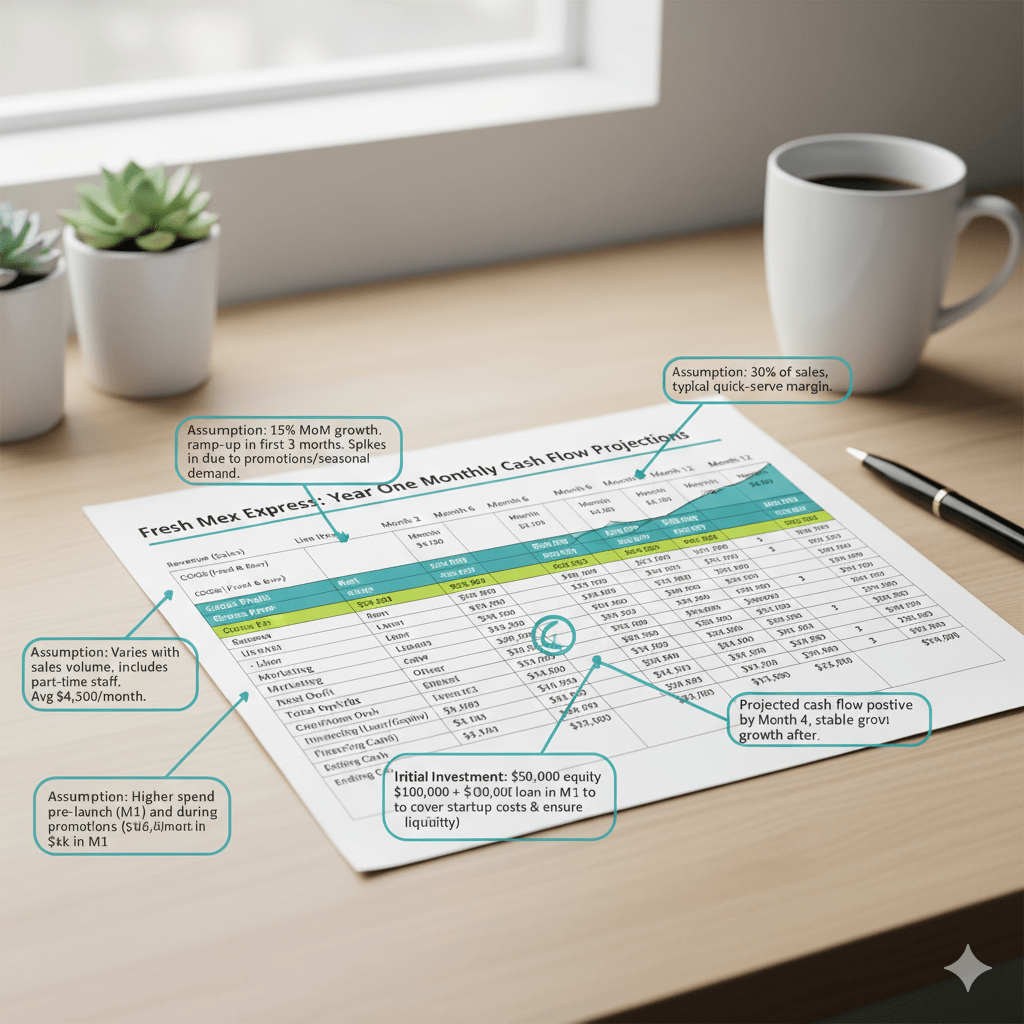
Fresh Mex Express

Food Truck Example: Seoul Food

This Korean-fusion food truck secured $120,000 in startup funding and became profitable within 6 months. Their business plan excelled with:

  • Detailed mobility strategy showing primary locations, events, and expected customer volume
  • Social media marketing plan that built a following before launch
  • Commissary kitchen arrangement that allowed for prep efficiency and catering expansion
  • Clear pathway to potential brick-and-mortar expansion in year three
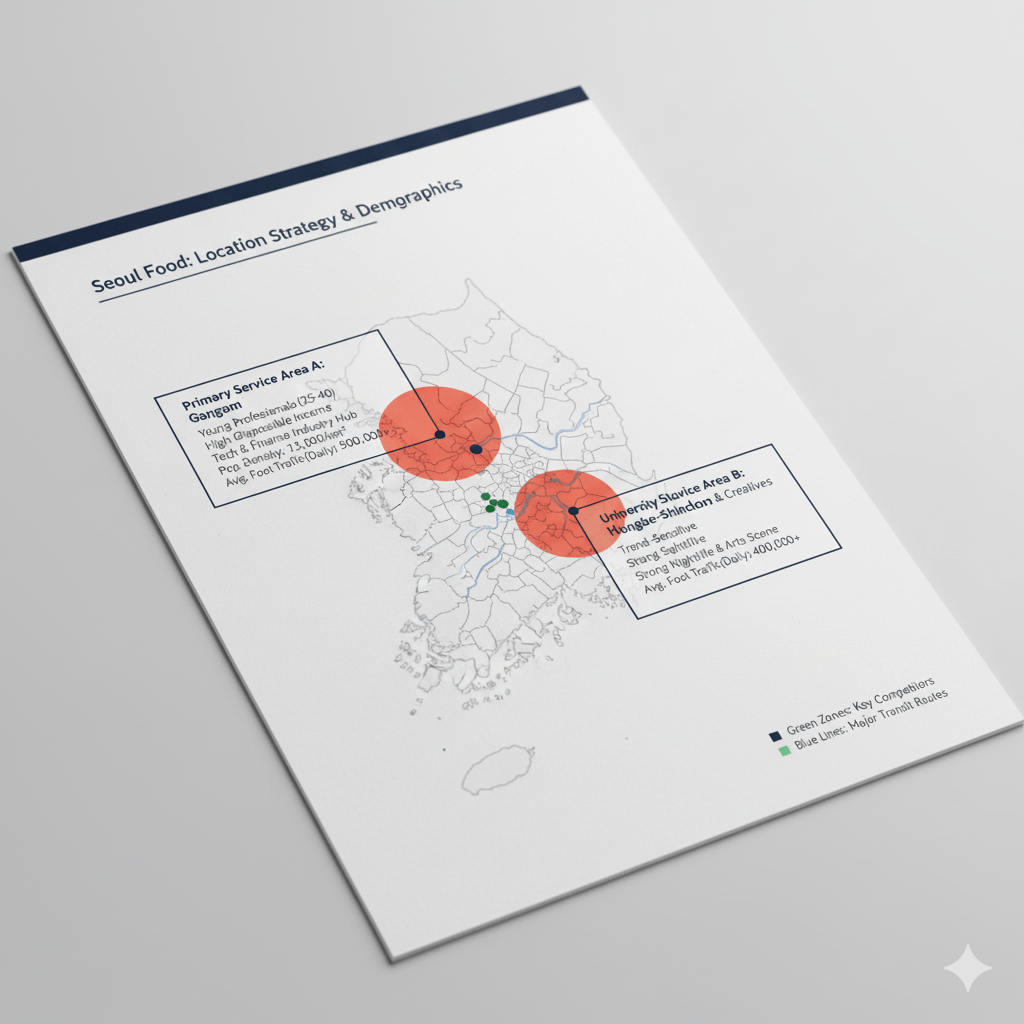
Location strategy map

6. Expert Tips from Successful Restaurant Owners

We interviewed restaurant owners who have successfully launched and scaled their concepts to share their business planning insights.

On Financial Planning

“Double your expected startup costs and triple your timeline. I’ve opened four restaurants, and not once have we come in under budget or ahead of schedule. Building this buffer into your plan shows investors you understand the realities of restaurant development.” – James Chen, Owner of Blue Ginger Restaurant Group

On Market Research

“Before writing a single word of my business plan, I spent three months working in a restaurant similar to my concept in another city. This hands-on research revealed operational challenges I never would have anticipated and completely changed my service model. No amount of theoretical research can replace practical experience.” – Maria Rodriguez, Owner of Alma Cocina

On Menu Development

“Your initial business plan should include menu engineering that balances what I call the ‘stars’ (popular, high-profit items), ‘workhorses’ (popular, lower-profit items), ‘puzzles’ (less popular, high-profit items), and ‘dogs’ (less popular, low-profit items). This strategic approach to menu design increased our profitability by 22% compared to our original concept.” – Thomas Washington, Executive Chef and Co-Owner, Provision & Co.

On Staffing Projections

“The most common mistake in restaurant business plans is underestimating labor costs and training time. In our business plan, we budgeted for 30% higher labor costs in the first three months than our projected steady state, plus dedicated training staff. This upfront investment paid off with lower turnover and consistent quality from week one.” – Sophia Lin, Founder, Rise Breakfast Co.

On Post-Pandemic Planning

“Any restaurant business plan in today’s environment must have robust contingency scenarios. We included three financial models: optimistic, realistic, and crisis. Having that crisis model ready when COVID hit allowed us to pivot immediately to a sustainable takeout model rather than panicking.” – Robert James, Owner, Provisions Urban Eatery

7. Interactive Financial Planning Tools

Creating accurate financial projections is often the most challenging aspect of restaurant business planning. These interactive tools will help you develop realistic numbers for your plan. For a faster, AI-powered approach to generating complete financial projections, try our business plan generator at tools.bizplanaipro.com.

Restaurant Startup Cost Calculator

This comprehensive tool helps you estimate all initial costs, including:

  • Real estate (purchase or lease deposits plus improvements)
  • Equipment (kitchen, bar, dining room, POS systems)
  • Initial inventory (food, beverage, smallwares)
  • Professional services (legal, accounting, design)
  • Permits and licenses
  • Initial marketing and branding
  • Working capital reserve

Access the Startup Cost Calculator

Menu Price Engineering Tool

This spreadsheet helps you optimize your menu pricing by:

  • Calculating precise food costs for each menu item
  • Determining ideal selling prices based on target food cost percentages
  • Analyzing contribution margins by menu category
  • Projecting overall food cost percentage based on expected sales mix

Access the Menu Price Engineering Tool

Labor Cost Modeling Worksheet

This tool helps you create accurate labour budgets by:

  • Building shift templates with proper staffing levels
  • Calculating hourly, weekly, and monthly labour costs
  • Projecting labour as a percentage of sales
  • Modelling different service styles and their labour requirements

Access the Labor Cost Modeling Worksheet

Break-Even Analysis Calculator

This essential tool helps you determine:

  • Your restaurant’s monthly break-even point in sales dollars
  • Number of customers needed daily to achieve profitability
  • Impact of different pricing strategies on your break-even point
  • Sensitivity analysis for changes in fixed and variable costs

Access the Break-Even Analysis Calculator

Cash Flow Projection Template

This critical planning tool helps you:

  • Project month-by-month cash inflows and outflows
  • Identify potential cash shortfalls before they occur
  • Plan for seasonal fluctuations in business
  • Determine total funding needed before reaching positive cash flow

Access the Cash Flow Projection Template

Success Story

“Used BizPlan AI Pro for our food truck plan. Secured $120K SBA loan in 3 weeks.”

— Marco Santos, Seoul Tacos Food Truck

“The financial projections were exactly what the bank needed. Saved me 40+ hours of spreadsheet work and the plan looked more professional than anything I could create manually.”

Start Your Restaurant Plan Free →

8. Common Mistakes to Avoid

Even the most thoughtful restaurant business plans can be undermined by common pitfalls. Here’s how to avoid the mistakes that frequently derail restaurant startups:

Unrealistic Financial Projections

Many restaurant plans project profitability too soon or overestimate sales while underestimating costs.

How to avoid this: Use industry benchmarks (like the National Restaurant Association’s Restaurant Industry Operations Report) for realistic ratios. The project is reaching only 70% of your expected sales in the first three months, and build in a 10% contingency for all costs.

Insufficient Market Research

Generic statements about target customers and competition reveal a lack of thorough research.

How to avoid this: Conduct formal market research, including competitor secret shopping, customer surveys in your target area, and analysis of similar concepts in comparable markets. Include specific data points rather than generalizations.

Vague Concept Definition

Many restaurant plans fail to articulate what makes the concept unique and compelling clearly.

How to avoid this: Create a clear, concise concept statement that explains your restaurant in one paragraph. Test this statement with potential customers to ensure it resonates and is easily understood. Include visual elements that bring your concept to life.

Overlooking Operational Details

Beautiful concepts fail without systems for consistent execution.

How to avoid this: Include detailed operational plans covering kitchen workflow, service standards, inventory management, and quality control systems. Create sample checklists and protocols that demonstrate how you’ll maintain consistency.

Inadequate Staffing Plans

Many plans underestimate staffing needs and the challenges of building a strong team.

How to avoid this: Develop detailed staffing models for different dayparts, comprehensive training plans, and competitive compensation strategies. Address current industry staffing challenges directly with innovative retention approaches.

Neglecting Marketing Specifics

“If we build it, they will come” is not a marketing strategy.

How to avoid this: Create a month-by-month marketing calendar for your first year with specific tactics, costs, and expected outcomes. Include both pre-opening and ongoing marketing initiatives with measurable goals.

Missing Contingency Plans

Restaurant plans often assume everything will go according to the ideal scenario.

How to avoid this: Include “What if?” scenarios addressing potential challenges like construction delays, slower-than-projected sales, key staff departures, or supply chain disruptions. Outline specific response strategies for each scenario.

9. Adapting Your Plan for Investors vs. Internal Use

Your restaurant business plan may need different versions depending on its purpose. Here’s how to adapt your plan for different audiences while maintaining its core integrity.

For Bank Loans

Banks focus primarily on risk assessment and your ability to repay the loan.

Emphasize:

  • Detailed financial projections with conservative assumptions
  • Your personal financial history and creditworthiness
  • Collateral and personal guarantees
  • Industry experience of key team members
  • Thorough market research supporting your sales projections

Include: Three years of detailed financial projections, personal financial statements, and specific use of funds with quotes/estimates.

For Angel Investors

Individual investors often decide based on financial potential and personal connection to your concept.

Emphasize:

  • Your passion and unique vision
  • Growth potential and scalability
  • Competitive advantages and barriers to entry
  • Clear exit strategy or ROI timeline
  • Social proof like industry endorsements or early customer interest

Include: Visual elements that bring your concept to life, team bios that highlight relevant successes, and testimonials from industry experts.

For Restaurant Groups or Strategic Partners

Established industry players evaluate concepts through an operational and strategic lens.

Emphasize:

  • Operational systems and scalability
  • How your concept complements their existing portfolio
  • Efficiency metrics like sales per square foot and turns per shift
  • Brand differentiation and target demographic alignment
  • Potential for multiple locations or concept extensions

Include: Detailed operational plans, specific expansion timelines, and analysis of how your concept fills a gap in their current offerings.

For Internal Planning

When the plan is primarily for your team’s guidance, focus on actionable details.

Emphasize:

  • Specific action items with responsible parties and deadlines
  • Detailed standard operating procedures
  • Training systems and quality standards
  • Key performance indicators for each department
  • Communication and decision-making protocols

Include: Operational checklists, training materials, and a detailed timeline for pre-opening and first year milestones.
business plan format

10. Conclusion & Next Steps

Creating a comprehensive restaurant business plan is an investment of time that pays dividends throughout your restaurant’s life. Using a Restaurant Business Plan Template as your foundation, your business plan is not just a document for securing funding—it’s the strategic foundation that will guide your decisions, help you measure success, and enable you to adapt to changing conditions. While restaurants and hotels share many hospitality industry similarities, each requires unique planning considerations. If you’re also exploring hotel development, check out our hotel business plan template for comprehensive guidance tailored to hotel operations.

As you finalize your Restaurant Business Plan Template, remember these key principles:

  • Be thorough but concise: Include all essential information while keeping your plan focused and readable.
  • Stay realistic: Base projections on industry benchmarks and thorough research rather than optimistic assumptions.
  • Emphasize differentiation: Clearly articulate what makes your restaurant unique in a competitive marketplace.
  • Plan for challenges: Include contingency strategies for common restaurant obstacles.
  • Update regularly: Your business plan should evolve as your restaurant grows and market conditions change.

With the templates, examples, and expert guidance provided in this guide, you now have the tools to create a restaurant business plan that helps secure funding and serves as your roadmap to success in the dynamic and rewarding world of restaurant ownership.

Your Next Steps:

  1. Download the template that best matches your restaurant concept
  2. Complete each section using the step-by-step guidance provided
  3. Utilize the interactive financial tools to create realistic projections
  4. Have industry professionals and potential customers review your plan
  5. Refine based on feedback before presenting to potential funders

Remember that a great restaurant starts with a great plan. By investing time now in creating a comprehensive business plan, you’re laying the groundwork for a successful, sustainable restaurant operation that can weather challenges and capitalize on opportunities in this exciting industry.

Ready to download your restaurant business plan template and start? Select the option that best fits your concept from section 3 above and begin your journey toward restaurant ownership today. Or skip the manual work and generate your complete business plan in minutes.

🎯 START CREATING YOUR AI BUSINESS PLAN NOW

Frequently Asked Questions

How long should a restaurant business plan be?

A comprehensive restaurant business plan typically ranges from 20-30 pages for full-service restaurants and 15-20 pages for simpler concepts like food trucks or cafés. The key is to be thorough while maintaining reader engagement. Include all essential information but avoid unnecessary padding. Investors typically review dozens of plans, so clarity and conciseness matter as much as comprehensiveness.

What are typical restaurant startup costs?

Restaurant startup costs vary significantly by concept and location. Full-service restaurants typically require $175,000-$750,000, while fast-casual concepts range from $125,000-$350,000 and food trucks $50,000-$150,000. Major cost categories include construction/equipment ($100,000-$450,000), initial inventory ($5,000-$15,000), permits/licenses ($5,000-$25,000), and working capital for 3-6 months ($30,000-$100,000). Detail these costs with local quotes in your business plan.

How do I create financial projections without existing sales data?

Start with industry benchmarks from the National Restaurant Association or local associations. Calculate daily covers based on seating capacity and table turns, multiplied by average check size from comparable restaurants. Use industry-standard percentages: food costs 28-35%, labor 25-35%, rent 6-10%, operating costs 10-15%. Project conservatively—only 60-70% capacity initially. Many business plan templates include financial projection tools with built-in benchmarks.

Should I hire someone to write my restaurant business plan?

Most restaurant entrepreneurs can create effective plans using quality templates. Writing your own plan builds deep business understanding—invaluable during investor presentations and operations. Consider professional help for financial projections if lacking accounting experience, but handle concept development, market analysis, and operational planning yourself for authentic voice and comprehensive knowledge.

How often should I update my restaurant business plan?

Update your business plan at minimum annually, but more frequently during your first year of operation. Review and adjust financial projections monthly for the first six months as you gather actual performance data. Update market analysis when significant competitors enter or exit your market. Revise operational sections when you make substantial changes to service model, menu, or staffing. The business plan should remain a living document that guides decisions rather than sitting forgotten on a shelf after securing initial funding.

What’s the most important section of a restaurant business plan?

While all sections matter, financial projections typically receive the most scrutiny from lenders and investors. However, don’t neglect your market analysis and concept differentiation—you need to prove both that there’s demand for your restaurant and that you offer something unique. The executive summary, though brief, may be the most critical for first impressions since some investors decide whether to read further based on those first two pages. A weak executive summary means the rest of your plan might never get read, regardless of how strong it is.

Can I use the same business plan for different investors?

You should customize your plan for different audiences. Banks focus on risk mitigation and repayment ability, so emphasize conservative projections, collateral, and industry experience. Angel investors often care more about growth potential and personal connection to your concept, so highlight vision and scalability. Restaurant groups evaluate operational systems and how your concept fits their portfolio. Keep one comprehensive “master” plan and create customized versions that emphasize different elements based on your audience, rather than writing entirely new plans from scratch.

Do I need a business plan if I’m self-funding my restaurant?

Yes. Even with personal funding, a business plan remains essential. It forces you to thoroughly research your market, calculate realistic costs, and plan operations before investing significant capital. Self-funded restaurants fail at the same rate as funded restaurants when they skip proper planning. The business plan serves as your operational roadmap, helps you identify potential problems before they occur, and provides metrics for measuring success. Many self-funded restaurateurs report that the planning process revealed critical issues or opportunities they hadn’t initially considered, potentially saving them from costly mistakes.

Do I need a business plan to get a restaurant loan?

Yes. Banks and SBA lenders require detailed business plans before approving restaurant loans. Your plan demonstrates repayment ability and reduces lender risk. Most require 3 years of financial projections, market analysis, and proof of industry experience.

Can AI write my restaurant business plan?

AI tools like BizPlan AI Pro can generate comprehensive restaurant business plans in 10-15 minutes by analyzing your concept and industry data. However, you should review and customize AI output with your specific local market insights and personal vision for best results.

What food cost percentage is normal for restaurants?

Target food costs of 28-35% of revenue for most restaurant types. Fine dining may run 35-40% while fast casual aims for 25-30%. Your business plan should reflect industry-standard ratios for your concept. Prime cost (food + labor) should stay under 65%.

Ready to Launch Your Restaurant Dream?

Get your professional restaurant business plan completed in minutes with our AI-powered business plan generator. Based on proven templates used by successful restaurants nationwide.

🚀 Create Your Restaurant Business Plan Now

✓ Professional formatting ✓ Industry benchmarks included ✓ Investor-ready in minutes

Daycare Business Plan: Your Guide to Success

Daycare Business Plan: Your Guide to Success

Daycare Business Plan

by jennifer latham

Starting a daycare can be a rewarding venture. You get to help families while also building a successful business. But to make it work, you need a solid daycare business plan. In this article, we’ll break down everything you need to know to create a great plan that stands out. Let’s dive in!

Why You Need a Daycare Business Plan

A daycare business plan isn’t just a fancy document. It helps you think through your ideas and set clear goals. Here’s why having one is essential:

  • Clarifies Your Vision: A plan helps you define what your daycare will be like.
  • Attracts Investors: If you need funding, investors want to see a detailed plan.
  • Guides Your Operations: It keeps you on track as you start and grow your business.

Key Elements of Your Daycare Business Plan

daycare business model

You must include several key sections to create an effective daycare business plan. Here’s what to cover:

1. Executive Summary

This is a brief overview of your entire plan. It should highlight the main points, like your mission and vision. Keep it concise—about one page is enough.

2. Market Analysis

Understand who your customers are. Here’s what to look into:

  • Target Audience: Who are the parents that will use your services?
  • Local Demand: Are enough families in your area looking for daycare?
  • Competitors: Research other daycares nearby and what they offer.

3. Services Offered

What kind of care will you provide? Some ideas include:

  • Full-time daycare
  • Part-time options
  • After-school programs
  • Special activities (like arts and crafts or outdoor play)

Make sure to describe each service clearly.

4. Marketing Strategy

How will you get the word out about your daycare? Here are some strategies to consider:

  • Social Media: Use platforms like Facebook and Instagram to connect with parents.
  • Community Events: Participate in local fairs or parenting expos.
  • Word of Mouth: Encourage satisfied parents to share their experiences.

5. Operations Plan

This section explains how your daycare will run on a day-to-day basis. Consider these points:

  • Location: Where will your daycare be? Is it safe and accessible?
  • Staffing: How many caregivers do you need? What qualifications should they have?
  • Daily Schedule: Outline a typical day for the children, including activities and meal times.

6. Financial Plan

This part shows how much money you’ll need and how you’ll make it back:

  • Startup Costs: List what you’ll spend on rent, furniture, and toys.
  • Pricing Strategy: How much will you charge parents? Research local rates for guidance.
  • Break-even Analysis: Figure out when you expect to start making a profit.

Tips for Writing Your Daycare Business Plan

As you write your plan, keep these tips in mind:

  1. Be Clear and Concise: Use simple language. Avoid jargon that might confuse readers.
  2. Stay Positive: Focus on the opportunities in the market rather than challenges.
  3. Use Visuals: Charts or graphs can help illustrate financial data or market trends.

Example of a Simple Daycare Business Plan Structure

Here’s how you might structure your business plan:

  1. Executive Summary
  2. Market Analysis
  3. Services Offered
  4. Marketing Strategy
  5. Operations Plan
  6. Financial Plan

Getting Feedback on Your Plan

Once you’ve drafted your daycare business plan, it’s helpful to get feedback:

  • Share it with friends or family to get their thoughts.
  • Consider asking a mentor or someone experienced in childcare for input.
childcare business plan

Final Thoughts

Creating a daycare business plan can feel overwhelming, but remember—you’re not alone in this process! With the right tools and guidance, you can build a successful daycare that makes a difference in your community.

So why wait? Start working on your daycare business plan today! You’ll be one step closer to turning your dreams into reality.

🎯 START CREATING YOUR DAYCARE BUSINESS PLAN NOW

AI Business Coach vs Human Business Coach

AI Business Coach vs Human Business Coach

AI Business Coach vs Human Business Coach

by jennifer latham

Are you trying to decide between an AI business coach vs human business coach? It’s a big choice! Both have their strengths and weaknesses. This guide will help you understand the differences and decide which is right for you.

Compare AI business coach vs human business coach

An AI business coach is a computer program that offers advice and support for your career or business. These coaches use data and algorithms to provide guidance. They can help you set goals, improve skills, and get feedback quickly.

Benefits of an AI Business Coach:

  • Speed: You get instant feedback. No waiting for your next appointment!
  • Scalability: Many people can use the service at once. It’s great for large teams.
  • Cost-Effective: Often, AI coaching is cheaper than hiring a human coach.

Limitations of an AI Business Coach:

  • Lacks Emotional Intelligence: AI can’t truly understand your feelings or struggles.
  • Limited Personalization: While it can give general advice, it may not address your unique situation.
  • No Real-Life Experience: AI doesn’t have personal experiences to draw from like a human does.

What is a Human Business Coach?

A human business coach is someone who works with you personally. They provide guidance based on their experience and understanding of real-life situations.

Benefits of a Human Business Coach:

  • Emotional Support: A human can understand and empathize with your feelings.
  • Personalized Guidance: They tailor their advice based on your specific needs and goals.
  • Experience and Insight: They draw from their own life experiences, which can be very valuable.

Limitations of a Human Business Coach:

  • Availability: You may have to wait for appointments, which can slow down progress.
  • Costly: Hiring a personal coach can be more expensive than using AI coaching.
  • Limited Scalability: A human coach can only work with a few clients at a time.

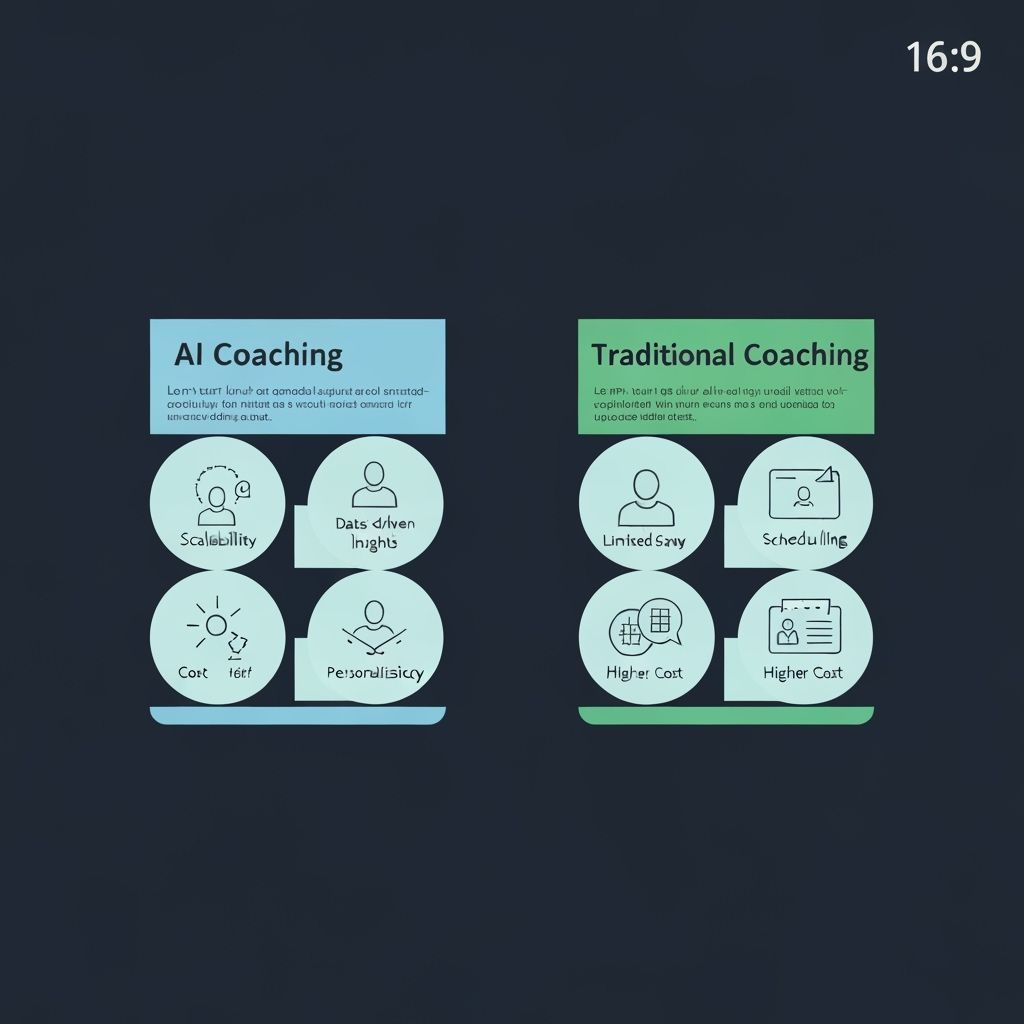
Key Differences Between AI and Human Coaches

Understanding the differences between an AI business coach vs human business coach can help you choose what fits your needs best. Here are some key points to consider:

FeatureAI Business CoachHuman Business Coach
Response TimeInstantScheduled
Emotional UnderstandingNoneHigh
CostGenerally lowerGenerally higher
PersonalizationLimitedTailored
ExperienceNoneReal-world
benefits AI coach vs human coach

When to Choose an AI Business Coach

You might want to consider an AI business coach if:

  1. You Need Quick Answers: AI is an excellent option for fast guidance.
  2. You’re on a Budget: AI coaching can be more affordable if cost is a factor.
  3. You Prefer Flexibility: Use the service whenever you want without worrying about scheduling.

When to Choose a Human Business Coach

On the other hand, you might prefer a human business coach if:

  1. You Want Emotional Support: If you’re going through tough times, talking to someone who understands can make a difference.
  2. You Need Customized Advice: Personalized guidance is essential if your situation is complex or unique.
  3. You Value Experience: Learning from someone who has been there can provide valuable insights.

How to Decide Between Them

Choosing between an AI business coach vs. human business coach doesn’t have to be hard. Here’s a simple step-by-step guide:

  1. Identify Your Needs:
  • Do you need quick answers or emotional support?
  • Are you looking for general advice or personalized guidance?
  1. Set Your Budget:
  • How much are you willing to spend?
  • Consider if the cost matches the value you’ll receive.
  1. Evaluate Your Comfort Level:
  • Do you feel comfortable sharing personal information with a computer?
  • Would you prefer face-to-face conversations?
  1. Try Both Options:
  • Many platforms offer free trials for AI coaching.
  • You can also schedule an initial session with a human coach.
  1. Reflect on Your Experience:
  • After trying both, think about what worked better for you.
  • Consider how each option made you feel.
A human business coach and an AI hologram collaboratively analyzing data on a transparent screen in a modern office.

Examples of Situations

Here are some real-world situations where AI business coach vs human business coach each type of coaching might fit better:

  • If you want to polish your resume quickly, an AI coach might help you edit it in no time.
  • If you’re struggling with work-life balance after a tough breakup, talking to a human coach could provide your needed support.

Conclusion

In summary, choosing between an AI business coach vs. human business coach depends on your specific needs and preferences. An AI coach offers speed and cost-effectiveness, while a human coach provides emotional understanding and personalized guidance.

Take time to weigh the options based on what matters most to you. Whether you go with AI or human coaching, remember that both paths can lead to growth and success in your career or business journey!

How Our AI Business Coach Works

How Our AI Business Coach Works

How Our AI Business Coach Works

by Peyman Shojaei

Are you looking to boost your business skills? If so, you’re in the right place! In this article, we’ll explore how our AI Business Coach works. We’ll break it down into simple parts, making it easy to understand and use. Let’s dive in!

What Is an AI Business Coach?

An AI Business Coach is an innovative tool that helps you improve your business skills. It uses artificial intelligence (AI) to give you advice, feedback, and support. Imagine having a coach who is always there for you! This coach can help you set goals, solve problems, and make better decisions.

Why Use an AI Business Coach?

You might be wondering why you should consider using an AI Business Coach. Here are some great reasons:

  • Affordable: Traditional coaching can be expensive. An AI coach is usually more affordable and gives you great value.
  • Available Anytime: You can access your coach whenever needed. No more waiting for appointments!
  • Personalized Guidance: The AI analyzes your needs and gives tailored advice.

How Does Our AI Business Coach Work?

Now that we know what an AI Business Coach is, let’s explain how it works.

1. Sign Up and Create Your Profile

First, you need to sign up for our service. It’s quick and easy!

  • Visit our website.
  • Click on “Sign Up.”
  • Fill in your details to create your profile.

This profile helps the AI understand who you are and what you want to achieve.

2. Set Your Goals

Next, you’ll set your goals with the help of the AI coach. Here’s how:

  • Identify your primary goals: What do you want to improve? This could be time management, leadership skills, or sales strategies.
  • Be specific: Instead of saying “I want to be better at sales,” try “I want to increase my sales by 20% in six months.”

The clearer your goals are, the better guidance you’ll receive.

AI coaching workflow

3. Get Personalized Coaching

Once you’ve set your goals, the fun part begins! The AI will start giving you advice tailored to your needs.

  • Daily Tips: Each day, the coach provides tips based on your goals.
  • Progress Tracking: You can see how well you do over time.
  • Feedback: The coach asks questions about your challenges and advises on overcoming them.

4. Practice with Real-Life Scenarios

To make learning effective, our AI Business Coach includes real-life scenarios. Here’s how:

  • Role-playing: You can practice conversations or situations that may happen in your business.
  • Decision-making exercises: The coach presents different scenarios where you must decide. This helps improve your problem-solving skills.

Examples of How Our AI Business Coach Helps

Let’s look at a few simple examples of how our AI coach can help you grow:

Example 1: Improving Time Management

You say you struggle with time management.

  1. The coach suggests using a calendar app.
  2. It recommends setting specific blocks of time for different tasks.
  3. You practice using these tips daily.

Example 2: Enhancing Leadership Skills

If leadership is your goal:

  1. The AI provides articles on effective leadership styles.
  2. You can role-play challenging situations with team members.
  3. Feedback helps refine your approach over time.

Tips for Getting the Most Out of Your AI Business Coach

To truly benefit from our AI Business Coach, here are some handy tips:

  • Check In Regularly: Make it a habit to check in with your coach daily.
  • Be Open to Feedback: Accept constructive criticism to improve.
  • Stay Committed: Consistency is key! Stick with it for the best results.
AI business coaching platform

Addressing Common Questions

Can I Trust the Advice from an AI?

Absolutely! Our AI uses data and algorithms based on proven coaching and business management methods. However, always use your judgment along with the advice given.

Is This Better Than a Human Coach?

While human coaches bring personal experience and empathy, an AI coach offers convenience and affordability. It’s up to you which fits your needs best!

Conclusion

In summary, our AI Business Coach is a fantastic tool that helps you grow in many aspects of business. From setting goals to receiving personalized advice, it’s like having a coach at your fingertips!

So why not give it a try? Remember, improving yourself is a journey worth taking! If you’re ready to start working on those goals, our AI Business Coach is here to help every step of the way.

Feel free to reach out if you have any questions or are ready to sign up today!

Complete Guide to AI Business Coaching in 2025

Introduction to AI Business Coaching

ai business coach

Have you ever felt stuck in your business? You may have faced challenges that seemed too big to handle alone. This is where an AI business coach comes in. These innovative tools use artificial intelligence to provide personalized coaching and support for entrepreneurs. They can help you make better decisions, plan your strategies, and boost your productivity.

In this blog post, we’ll dive deep into what AI business coaching is all about. We’ll explore personal experiences, compare popular tools, discuss the benefits and challenges, and even look at how AI coaching can work alongside traditional methods. Whether you’re a seasoned entrepreneur or just starting, there’s something here for you.

Personal Experiences with AI Coaches

Let me share a quick story. A friend of mine, Jessica, runs a small online store. She was overwhelmed with managing her inventory and marketing. After reading about AI business coaches, she decided to try one. The AI tool helped her analyze her sales data and suggested ways to improve her marketing. Within a few months, her sales increased by 30%!

Jessica’s experience highlights how AI coaching can make a difference. It’s not just about having someone to guide you; it’s about using smart technology to get insights you might not see on your own. Many entrepreneurs have found success by integrating AI coaches into their business strategies.

Comparison of Popular AI Coaching Tools

There are several AI coaching tools available today. Here’s a brief look at some popular ones:

  • BetterUp: This platform offers personalized coaching focused on mental wellness and performance. It uses AI to match users with the right coach based on their needs.
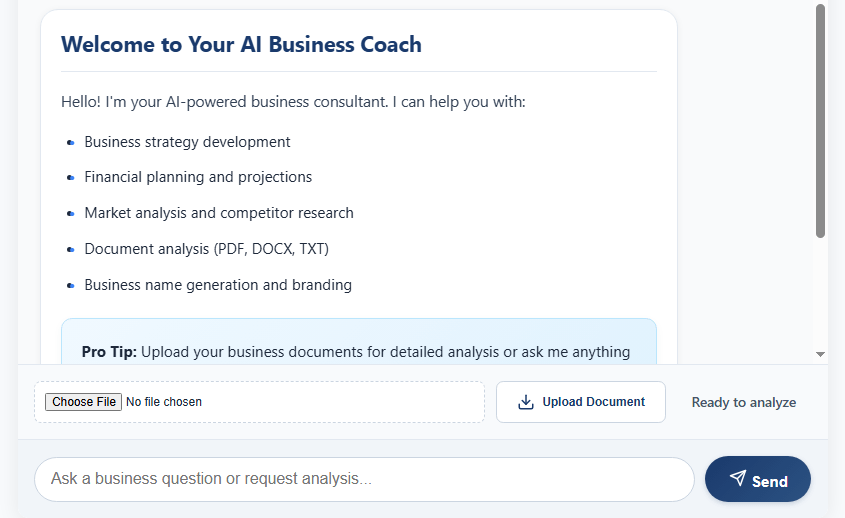
  • BizplanAI Pro : This platform helps with business strategy, financial planning, market research, competitor analysis, document review (PDF, DOCX, TXT), and creating business names and branding. The AI business coach covers all the main needs for business coaching.
  • Clara: Clara focuses on productivity. It helps users prioritize tasks and manage their time effectively. Its AI analyzes your workflow and suggests improvements.
  • CoachAccountable: This tool is designed for accountability. It allows users to set goals and track their progress. The AI provides reminders and suggestions to keep you on track.

When choosing an AI business coaching tool, consider what you need most. Do you want help with productivity, accountability, or personal development? Each tool has its strengths, so it’s essential to find the right fit for your situation.

business coach ai

by Peyman Shojaei

Benefits of AI Coaching for Entrepreneurs

AI business coaching offers several benefits for entrepreneurs. Here are some of the most significant advantages:

  • 24/7 Availability: Unlike traditional coaches, AI coaching tools are available around the clock. This means you can access help whenever you need it.
  • Cost-Effective: AI coaches are often more affordable than hiring a personal coach. This makes coaching accessible for more people.
  • Data-Driven Insights: AI tools analyze vast amounts of data to provide tailored advice. This helps you make informed decisions based on real evidence.
  • Personalization: AI coaches adapt their strategies based on your unique business needs and goals, ensuring that you receive relevant guidance.

These benefits of AI coaching can empower you to tackle challenges head-on and achieve your business goals more effectively.

Limitations and Challenges of AI Coaching

While AI coaching has many advantages, it’s also essential to consider its limitations. Here are some challenges that users may face:

  • Lack of Human Touch: AI business coaches, while helpful, lack the empathy and understanding that a human coach can provide. This can make it harder to navigate emotional challenges.
  • Technical Issues: Not everyone is tech-savvy. Some entrepreneurs may find it challenging to use AI tools effectively, hindering their progress.
  • Data Privacy Concerns: Sharing sensitive business information with AI tools can raise privacy issues. It’s crucial to choose tools that prioritize data security.
  • Over-Reliance on Technology: Entrepreneurs may become overly dependent on AI coaching and neglect other valuable sources of guidance, such as mentorship from experienced professionals.

Recognizing these limitations is essential for making the most of AI coaching while still seeking human support when needed.

User Testimonials and Case Studies

To provide a clearer picture of AI business coaching’s effectiveness, let’s look at some user testimonials and case studies:

One entrepreneur, Mark, used an AI coaching tool to help him streamline his marketing strategy. He said, “The AI coach helped me see patterns in my customer data that I never noticed before. Now, I can target my ads more effectively, and my conversion rates have doubled!”

Another user, Lisa, shared her experience: “I was initially skeptical, but the AI coach gave me actionable insights that I could implement immediately. It felt like having a personal advisor, but without the hefty price tag.”

These testimonials show that many users have succeeded with AI coaching. However, it’s essential to remember that results can vary based on individual circumstances.

Integrating AI Coaching with Traditional Methods

AI coaching doesn’t have to replace traditional coaching methods; it can complement them. Here’s how:

  • Hybrid Approach: Many entrepreneurs find success by using both AI tools and traditional coaches. This hybrid approach allows them to get data-driven insights while benefiting from personalized support.
  • Supplementary Resource: AI coaching can serve as a supplementary resource for traditional coaching sessions. It can help clients prepare for meetings or follow up on action items.
  • Continuous Learning: AI tools can provide ongoing education and resources that traditional coaches may not cover. This keeps entrepreneurs informed and engaged.

By integrating AI coaching with traditional methods, entrepreneurs can create a well-rounded support system that leverages the strengths of both approaches.

Conclusion and Call to Action

AI business coaching revolutionizes how entrepreneurs seek guidance and support. While it offers many benefits, being aware of its limitations is crucial. By understanding how AI coaching works and exploring different tools, you can find the right fit for your business needs.

If you’re curious about AI coaching, why not try? Explore popular tools, read user testimonials, and see how they can help you achieve your goals. Remember, integrating AI coaching with traditional methods can provide a balanced approach to your growth.

Ready to take the next step? Start researching AI coaching tools today and unlock your potential as an entrepreneur!

Benefits of AI Business Coaching vs Traditional Coaching

Benefits of AI Business Coaching vs Traditional Coaching

by Peyman Shojaei

In today’s fast-paced world, many people wonder about the benefits of AI business coaching vs traditional coaching. Both have their strengths, but they serve different purposes. In this article, we’ll break down what makes each type of coaching unique and how you can choose the best option for yourself.

What is AI Business Coaching?

AI business coaching uses artificial intelligence to guide you in your career or business journey. Imagine having a virtual assistant that helps you set goals, track your progress, and offers advice based on data.

Key Features of AI Business Coaching

  • Speed: AI can analyze data quickly. It provides feedback almost instantly.
  • Availability: You can access AI coaching anytime, anywhere. It doesn’t take breaks.
  • Personalization: AI can tailor advice to your needs using data from your previous interactions.
AI vs traditional coaching

What is Traditional Coaching?

Traditional coaching involves a human coach guiding you through personal development. This method often relies on conversation, understanding emotions, and building trust.

Key Features of Traditional Coaching

  • Emotional Connection: A human coach can relate to your feelings and experiences.
  • Flexibility: Coaches can adjust their approach based on your mood and situation.
  • Supportive Environment: Having someone to talk to can be comforting and motivating.

Comparing the Two: Benefits of AI Business Coaching vs Traditional Coaching

Now let’s dive into the benefits of each type of coaching. This will help you understand which might be right for you.

Benefits of AI Business Coaching

  1. Efficiency: AI tools can process large amounts of data quickly. This means less waiting for feedback.
  2. Cost-Effective: Many AI coaching programs are cheaper than hiring a traditional coach.
  3. Scalability: You can reach many people at once with AI. This is great for businesses looking to train their teams.
  4. Data-Driven Insights: AI uses data to provide personalized advice. For example, if you struggle with time management, it can suggest techniques tailored just for you.

Benefits of Traditional Coaching

  1. Human Connection: The emotional support from a human coach can be invaluable. They understand your struggles and celebrate your successes with you.
  2. Deep Understanding: A good coach listens deeply and asks questions that help you think critically about your situation.
  3. Accountability: When you have regular sessions with a coach, it keeps you accountable for your goals.
  4. Holistic Approach: Coaches often consider various aspects of your life, not just your career.

When to Choose AI Business Coaching

AI business coaching might be the right choice for you if:

  • You want quick answers or solutions.
  • You need support outside regular business hours.
  • You’re focused on specific skills or tasks that need improvement.

For example, if you’re starting a new project and want instant feedback on your progress, an AI tool can guide you effectively.

When to Choose Traditional Coaching

On the other hand, traditional coaching might suit you better if:

  • You prefer emotional support and understanding.
  • You’re looking for a long-term relationship with a coach.
  • You need help navigating complex issues that require empathy.

For instance, if you’re facing a major career change and need someone to help you process those feelings, a human coach would be ideal.

Blending Both Approaches

You don’t have to pick just one! Many people find success by combining both AI business coaching and traditional coaching.

advantages of AI business coaching

Here’s How You Can Do It:

  1. Start with AI Tools: Use an AI coaching app to set initial goals and track progress.
  2. Schedule Regular Check-ins with a Coach: Meet with a traditional coach monthly to discuss feelings and deeper challenges.
  3. Use Data from AI in Your Sessions: Bring insights from the AI tool to your human coach for discussion.

This blend allows you to benefit from quick insights while also having emotional support.

Tips for Getting Started

If you’re ready to explore the benefits of AI business coaching vs traditional coaching, here are some steps to consider:

  1. Research Available Options: Look into different AI coaching platforms. Compare features and prices.
  2. Ask for Recommendations: If considering traditional coaching, ask friends or colleagues for suggestions.
  3. Try Free Trials or Initial Sessions: Many services offer free trials—use this opportunity to see what works best for you.
  4. Set Clear Goals: Before starting any type of coaching, identify what you want to achieve.

Conclusion

Choosing between the benefits of AI business coaching vs traditional coaching depends on your needs and preferences. Both have unique advantages that can help you grow in your career or personal life.

If you’re looking for fast results and data-driven insights, consider AI coaching. However, if emotional support and personal connection are important to you, traditional coaching may be the better fit.

Ultimately, blending both approaches could give you the best of both worlds! Take some time to explore your options and find what works best for you on your journey to success.

Lunch Truck Business Plan: Your Guide to Success

Lunch Truck Business Plan

by El S

Lunch Truck Business Plan: Your Guide to Success

Are you thinking about starting a lunch truck business? You’re not alone! Many people love food trucks because they offer tasty meals on the go. But before you hit the road, you need a solid lunch truck business plan. This plan will help you outline your goals, understand your market, and manage your finances. In this article, we’ll walk you through the steps to create a successful business plan.

Why You Need a Lunch Truck Business Plan

A lunch truck business plan is important for several reasons:

  • Clarifies Your Vision: It helps you see what you want to achieve.
  • Guides Your Decisions: You’ll make informed choices about your business.
  • Attracts Investors: If you need money, a good plan shows investors that you know what you’re doing.
  • Helps You Manage Finances: You can track your income and expenses better.

Key Sections of Your Lunch Truck Business Plan

Creating your lunch truck business plan doesn’t have to be complicated. Here are the main sections you should include:

1. Executive Summary

The executive summary is like the cover of a book. It gives an overview of your entire plan. Keep it short but engaging. Answer these questions:

  • What type of food will you serve?
  • Who is your target audience?
  • What makes your truck special?

2. Company Description

In this section, explain more about your lunch truck. Include:

  • Your business name
  • The type of cuisine you’ll offer
  • Your mission statement (what you want to achieve)

3. Market Analysis

Understanding your market is crucial for success. Here’s what to consider:

  • Target Audience: Who will buy from you? Think about age, income, and interests.
  • Competition: Who else is selling food in your area? What are their strengths and weaknesses?
  • Trends: What food trends are popular now? For example, plant-based diets or gourmet sandwiches.

4. Marketing Strategy

How will people find out about your lunch truck? Here are some tips:

  • Social Media: Use platforms like Instagram and Facebook to show off your food.
  • Local Events: Participate in community events to attract customers.
  • Promotions: Offer discounts or loyalty programs to keep customers coming back.

5. Operations Plan

This section covers how your lunch truck will run day-to-day:

  • Location: Where will you park your truck? Think busy areas like office districts or parks.
  • Hours of Operation: Decide when you’ll be open for business.
  • Suppliers: Who will provide your ingredients? Build relationships with local farms or grocery stores.

6. Financial Projections

Finally, it’s time to talk money. Create a budget that includes:

  • Start-up costs (like the truck and equipment)
  • Monthly expenses (like food supplies and gas)
  • Projected income (how much you expect to make)

Use realistic numbers here. Investors want to see that you’ve thought this through.

food truck business plan

Tips for Writing Your Lunch Truck Business Plan

Here are some additional tips to keep in mind as you write:

  1. Be Clear and Concise: Use simple language and short sentences.
  2. Be Realistic: Don’t overestimate sales or underestimate costs.
  3. Get Feedback: Share your plan with friends or mentors for advice.

Example of a Simple Lunch Truck Business Plan Outline

If you’re feeling overwhelmed, here’s a simple outline you can use:

  1. Executive Summary
  2. Company Description
  3. Market Analysis
  • Target Audience
  • Competition
  • Trends
  1. Marketing Strategy
  2. Operations Plan
  3. Financial Projections

By following this outline, you’ll make sure you cover all the important parts of a lunch truck business plan.

If you’re looking for additional guidance, check out our guide on creating a business plan with AI.

food truck business model

by jennifer latham

Conclusion

Starting a lunch truck business can be exciting and rewarding. A solid business plan is key to making it successful. Use this guide to help you create a clear and effective plan that outlines your vision and strategy.

Remember, take it one step at a time! Before long, you’ll be serving delicious meals on wheels.

🎯 START CREATING LUNCH TRUCK BUSINESS PLAN NOW

What is AI Business Coaching?

ai-business-coaching

What is AI Business Coaching? A Complete Guide to Artificial Intelligence in Business Development

Have you ever wondered how technology can help you grow your business? In recent years, a new tool has emerged: AI business coaching. This tool uses artificial intelligence to help people improve their business skills. But what exactly does that mean? Let’s explore AI business coaching in detail.

Understanding AI

First, let’s break down what AI means. AI stands for artificial intelligence. This technology can mimic human thinking. It learns from data and improves over time. Think of it like a wise friend who knows a lot about business. AI can analyze your business, advise, and help you make better decisions.

What is Business Coaching?

AI business coaching consultation with digital interface

by Olawale Munna

Before diving into AI business coaching, let’s look at traditional business coaching. Business coaching is when an expert helps someone improve their business skills. Coaches provide guidance, support, and strategies to help you succeed. They often meet with you regularly to discuss Progress and challenges.

The Role of a Business Coach

A good business coach will:

  • Listen to your ideas and concerns
  • Provide feedback on your business plans
  • Help you set and achieve goals
  • Offer strategies to overcome challenges
  • Motivates you to stay focused and positive

Now, imagine if technology could do some of these things. That’s where AI business coaching comes in!

What is AI Business Coaching?

AI business coaching combines artificial intelligence with business coaching. It uses innovative technology to help you grow your business. Here’s how it works:

  1. Data Collection: AI collects data from your business. This can include sales numbers, customer feedback, and market trends.
  2. Analysis: The AI analyses this data. It looks for patterns and areas where you can improve.
  3. Personalized Recommendations: AI provides tailored advice based on the analysis. This advice is specific to your business needs.
  4. Goal Setting: AI helps you set realistic goals. It can track your Progress and adjust goals as needed.
  5. Continuous Learning: As you use the AI, it learns more about your business. This means the advice gets better over time.

Benefits of AI Business Coaching

AI business coaching offers many benefits. Here are some key advantages:

1. Cost-Effective

Traditional coaching can be expensive. Hiring a personal coach often requires a significant investment. AI coaching is usually more affordable. Many platforms offer subscription models that fit different budgets.

2. 24/7 Availability

AI never sleeps! You can access AI coaching anytime, anywhere. This is great for busy entrepreneurs who need flexibility. Whether it’s late at night or early in the morning, AI is ready to help.

3. Data-Driven Insights

AI uses data to provide insights. This means you get advice based on facts. Instead of guessing what works, you can rely on proven strategies.

4. Personalized Experience

AI tailors its coaching to your specific needs. It takes into account your business type, size, and industry. This personalized approach makes the advice more relevant.

5. Continuous Improvement

As you make changes, AI tracks your Progress. It learns from your actions and adjusts its recommendations. This creates a cycle of continuous improvement.

How Does AI Business Coaching Work?

Let’s look at how AI business coaching actually works. Here’s a simple breakdown of the process:

Step 1: Choose a Platform

First, you need to choose an AI coaching platform. Some popular options include:

  • Clara: Offers personalized coaching sessions based on your business data.
  • CoachAccountable: Focuses on tracking Progress and setting goals.
  • Evercoach: Provides resources and AI tools for coaches and entrepreneurs.

Step 2: Input Your Data

Once you pick a platform, you’ll input your business data. This can include sales figures, customer demographics, and marketing efforts. The more data you provide, the better the AI can assist you.

Step 3: Receive Insights

After analyzing your data, the AI will offer insights. For example, it might suggest ways to increase customer retention or improve your marketing strategy. These suggestions are based on your specific situation.

Step 4: Set Goals

Next, you can set goals with the AI’s help. The AI will suggest realistic goals based on your current performance and industry standards.

Step 5: Monitor Progress

As you work towards your goals, the AI will track your Progress. It will provide updates and adjust recommendations as needed. This helps you stay on track and make necessary changes.

Real-Life Examples of AI Business Coaching

Let’s look at some real-life examples to understand AI business coaching better.

Example 1: A Small Retail Store

Imagine a small retail store owner named Sarah. Sarah struggles with sales during certain seasons. She decides to try an AI coaching platform.

  • The AI analyses last year’s sales data.
  • It notices a drop in sales during the winter months.
  • The AI recommends special promotions and marketing strategies for winter.
  • Sarah follows the advice and sees an increase in sales.

Example 2: A Freelance Graphic Designer

Now consider Tom, a freelance graphic designer. He wants to attract more clients. He uses AI coaching to help.

  • The AI reviews his website and social media presence.
  • It suggests improving his portfolio and posting more frequently on social media.
  • Tom implements these changes and gains new clients within weeks.

Potential Challenges of AI Business Coaching

While AI business coaching is helpful, it comes with challenges. Here are some potential downsides:

1. Lack of Human Touch

AI cannot replace human connection. Some people may prefer the personal touch of a real coach. Human coaches offer empathy and understanding that AI cannot provide.

2. Dependence on Data

AI relies heavily on data. The advice may be impractical if the data is inaccurate or incomplete. Always ensure your data is up-to-date and accurate.

3. Learning Curve

Some users may find it challenging to navigate AI platforms. A little patience and practice can help overcome this hurdle.

Conclusion

AI business coaching is an exciting way to enhance your business skills. It combines the power of technology with personalized advice. By using AI, you can make better decisions, set realistic goals, and improve your business performance.

While there are challenges, the benefits often outweigh them. Whether you’re a small business owner or a freelancer, AI coaching can help you succeed.

So why not give it a try?

🎯 START BUSINESS COACHING NOW

Laundromat Business Plan: A Simple Guide to Your Success

Laundromat Business Plan: Complete Guide to Success

Entrepreneur writing a laundromat business plan at a sunny desk with laptop and coffee

by El S

Starting a laundromat business can be exciting and rewarding. If you’re thinking about creating a laundromat business plan, you’re in the right place! This guide will help you understand what you need to include in your plan and how to make it successful.

Why You Need a Laundromat Business Plan

A laundromat business plan serves as your roadmap. It outlines your goals, strategies, and how you plan to achieve them. Here are a few reasons why having a solid plan is essential:

  • Guides Your Decisions: A clear plan helps you make informed decisions.
  • Attracts Investors: If you need funding, a well-prepared plan can impress investors.
  • Identifies Challenges: It helps you see potential challenges and find ways to overcome them.

Key Components of a Laundromat Business Plan

Creating a laundromat business plan might seem overwhelming, but breaking it down into parts makes it easier. Here are the key components you should include:

Modern laundromat interior with energy-efficient washers and dryers and happy customers

1. Executive Summary

Start with an executive summary. This is a brief overview of your entire business plan. It should cover:

  • What your laundromat will offer.
  • Your target market.
  • Your financial goals.

2. Company Description

Next, describe your laundromat. Include details about:

  • The location and why it’s ideal for laundry services.
  • The type of services you’ll provide (self-service, wash and fold, etc.).
  • Your mission statement (what drives your business).

3. Market Analysis

Understanding your market is crucial. Research your target customers and competitors. Consider:

  • Who are your customers? (Students, families, etc.)
  • What do they want from a laundromat?
  • How many competitors are in the area? What do they offer?

4. Marketing Strategy

Your marketing strategy outlines how you’ll attract customers. Think about:

  • Online Presence: Will you have a website? Use social media?
  • Promotions: Will you offer discounts or loyalty programs?
  • Community Engagement: How will you connect with locals?

5. Operations Plan

Detail how you’ll run your laundromat day-to-day. Include:

  • Equipment needs (washing machines, dryers).
  • Staff requirements (how many employees you’ll need).
  • Hours of operation.

6. Financial Projections

This section shows how much money you expect to make and spend. Include:

  • Startup costs (equipment, rent, utilities).
  • Monthly expenses (staff salaries, supplies).
  • Revenue projections for the first few years.
Laundromat owner discussing a loyalty program with a senior customer

7. Funding Request

If you’re seeking funding, clearly outline how much money you need and what it will be used for. Be specific about:

  • Startup costs.
  • Any ongoing expenses until the business becomes profitable.

Tips for Creating Your Laundromat Business Plan

Here are some simple tips to help you create an effective laundromat business plan:

  1. Be Clear and Concise: Avoid long paragraphs. Keep sentences short.
  2. Use Simple Language: Don’t use jargon or technical terms that might confuse readers.
  3. Be Realistic: Set achievable goals and honest projections.
  4. Get Feedback: Share your draft with friends or mentors for input.

Example Outline of a Laundromat Business Plan

To help visualize what your plan might look like, here’s a simple outline:

  1. Executive Summary
  • Overview of services
  • Target market
  • Financial goals
  1. Company Description
  • Location
  • Services offered
  • Mission statement
  1. Market Analysis
  • Target customer profiles
  • Competitor analysis
  1. Marketing Strategy
  • Online presence
  • Promotions
  • Community engagement strategies
  1. Operations Plan
  • Equipment needs
  • Staffing requirements
  • Hours of operation
  1. Financial Projections
  • Startup costs
  • Monthly expenses
  • Revenue forecasts
  1. Funding Request
  • Amount needed
  • Purpose of funds

Steps to Start Your Laundromat Business

New commercial washing machine installation in a clean laundromat startup

Once you’ve written your laundromat business plan, here’s how to move forward:

  1. Conduct Market Research: Get to know your target market and competitors thoroughly.
  2. Secure Funding: Use your business plan to approach banks or investors for funding.
  3. Choose the Right Location: Look for high foot traffic areas with little competition.
  4. Purchase Equipment: Invest in quality washing machines and dryers that meet customer needs.
  5. Market Your Business: Launch marketing campaigns before opening day to attract customers.
🎯 START CREATING YOUR LAUNDROMAT BUSINESS PLAN NOW

Conclusion

Creating a laundromat business plan doesn’t have to be complicated. By following this guide and including all the essential components, you’ll set yourself up for success in the laundry industry.

Remember, starting a laundromat is more than just washing clothes; it’s about providing convenience and excellent service to your community. So take the leap, stick to your plan, and watch your business grow! If you have any questions or need further guidance, feel free to reach out!

Essential Steps for Crafting a Business Plan

Essential Steps for Crafting a Business Plan

business plan

Writing a Business Planby Content Pixie

Creating a business plan is like drawing a map for your journey in entrepreneurship. It helps you outline your goals and shows you how to achieve them. Whether starting a small café or launching a tech startup, a solid plan is essential. In this guide, we’ll explore the steps to craft a business plan that works for you.

What Is a Business Plan?

A business plan is a written document. It describes your business idea and how you plan to make it successful. The business plan’s meaning is simple: it’s your roadmap to success. It outlines your goals, strategies, and the steps you need to take.

Why Do You Need a Business Plan?

Having a business plan helps in many ways:

  • Clarifies your ideas: It forces you to think through your business concept.
  • Attracts investors: Investors want a clear plan before investing money into your business.
  • Guides your operations: A plan helps you stay on track as you start and grow your business.

Steps to Create Your Business Plan

Now, let’s dive into the essential steps for crafting a business plan. We will break it down into easy-to-follow sections.

create business plan

Step 1: Research and Understand Your Market

Before you write anything, you need to know your market. Research who your customers are and what they need. Look at your competitors as well.

  • Identify your target audience: Who will buy your product or service?
  • Analyze your competition: What are other businesses doing? How can you do it better?

For example, check out other local bakeries if you want to open a bakery. Starting a lunch truck business. What do they offer? How can you stand out?

Step 2: Outline Your Business Concept

Once you understand your market, outline your business concept. This section is the heart of your entrepreneurship business plan.

  • Describe your product or service: What are you selling? Why is it unique?
  • Define your mission statement: What do you want your business to achieve?

For instance, a bakery might focus on organic ingredients and a cosy atmosphere. This helps your readers understand your vision.

Step 3: Create a Business Layout

A business layout is how you plan to organise your business. It includes your structure, location, and operations.

  • Choose a business structure: Will you be a sole proprietor, a partnership, or an LLC?
  • Decide on a location: Where will your business operate? Online or physical store?

For example, if you decide to grow your business online, consider how you will market and deliver your products.

Step 4: Develop Your Marketing Plan

Your marketing plan outlines how you will attract customers. This is crucial for your startup business plan.

  • Identify your marketing strategies: Will you use social media, email marketing, or traditional advertising?
  • Set a budget for marketing: How much can you spend to promote your business?

For example, if you are opening a bakery, you might use Instagram to share photos of your delicious treats. You could also offer samples at local events to attract customers.

Step 5: Plan Your Finances

Financial planning is a key part of how to write a business plan. You need to know how much money you need to start and operate your business.

  • Estimate your startup costs: Equipment, inventory, and rent.
  • Create a budget: Outline your monthly expenses and projected income.

For instance, if your bakery needs $10,000 to start, break down the costs. This might include $2,000 for equipment, $3,000 for initial inventory, and $5,000 for rent.

Step 6: Create an Operations Plan

Your operations plan describes how your business will run daily. It should include:

  • Staffing needs: What roles do you need to fill?
  • Suppliers: Who will provide your inventory?
  • Production processes: How will you create your products?

For example, you might need bakers and cashiers if you run a bakery. You’ll also need to find suppliers for flour, sugar, and other ingredients.

Step 7: Write the Executive Summary

The executive summary is a brief overview of your entire business plan. It often appears first but should be written last. This is because you’ll want to summarise all the key points clearly.

  • Highlight your business concept: What is your business about?
  • Include your financial goals: What are you aiming for in the first year?

This section is crucial because it is often the first thing investors will read. Make it clear and compelling.

Step 8: Include Appendices and Supporting Documents

Your business plan can include additional documents in the appendix. This helps support your claims and gives more information.

  • Market research data: Include charts or graphs about your market.
  • Resumes of key team members: Show the experience of your team.
  • Legal documents: Any permits or licenses needed for your business.

Step 9: Review and Revise

Once you have written your plan, it’s time to review it. Ask yourself:

  • Does it clearly explain my business idea?
  • Are my financial projections realistic?
  • Have I included all necessary information?

Consider asking a friend or mentor for feedback. They can provide new insights and help you improve your plan.

Step 10: Finalise Your Business Plan

create business plan

Startup Planning Process by Kelly Sikkema

After making revisions, your business plan is almost ready. Make sure to format it nicely. Use headings, bullet points, and charts where necessary. This makes it easy to read.

  • Use a business plan template: This can help you structure your plan effectively.
  • Ensure clarity: Avoid jargon and keep sentences short.

Common Questions About Business Plans

What section of the business plan should be written last?

The executive summary should be written last. It summarises the entire plan.

Who should prepare the business plan?

The business plan should be prepared by the business owner or the team behind the venture. Involving others can provide valuable insights.

How to develop a business plan for a startup?

Follow the steps outlined in this article. Research your market, outline your concept, and plan your finances.

Conclusion

Creating a business plan may seem overwhelming, but it’s an essential step in your entrepreneurial journey. It helps clarify ideas, attract investors, and guide business operations. By following these basic steps, you can design a plan for your startup that sets you on the path to success.

Remember, every great business starts with a strong plan. So take the time to craft yours carefully. Your future success depends on it!

💬 Need Help?

Live Support