The Ultimate Restaurant Business Plan Template Guide: Free Downloads & Expert Advice
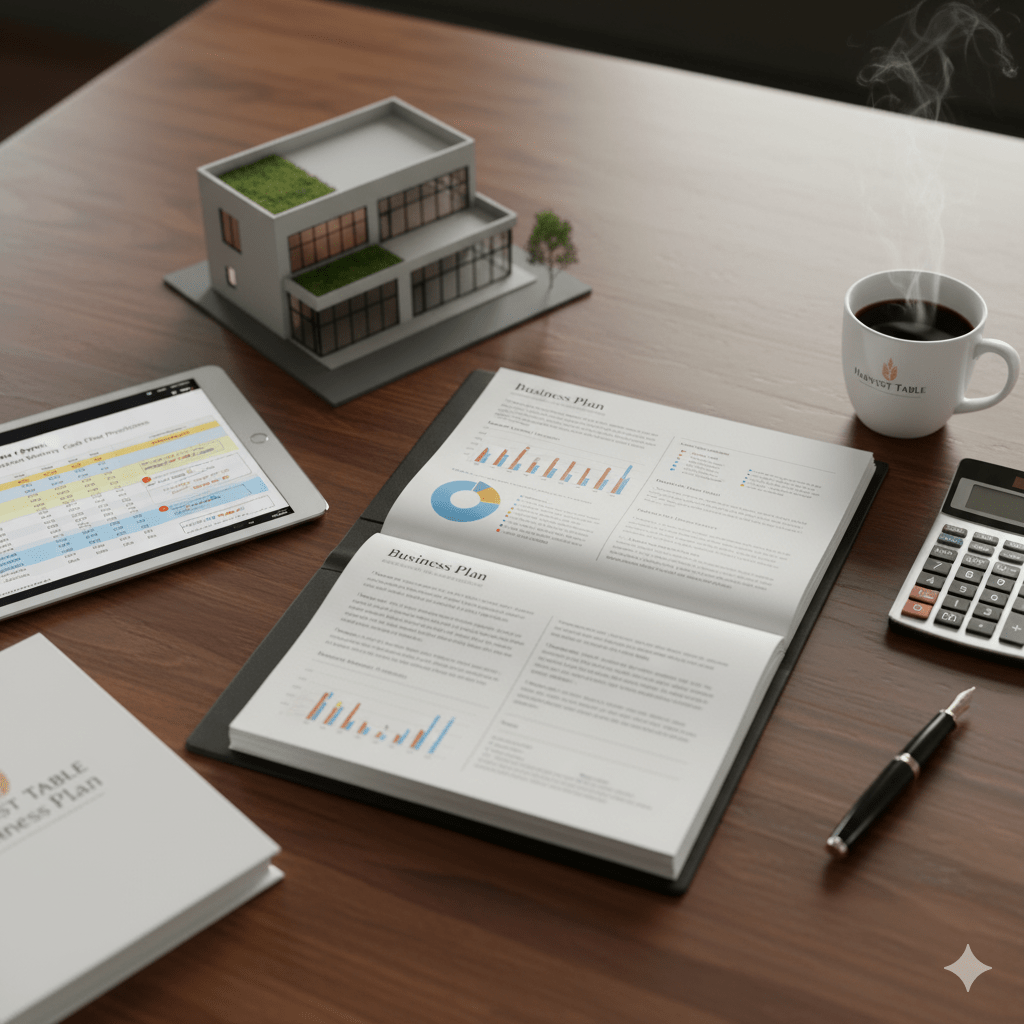
Starting a restaurant requires more than just a passion for food and hospitality—it demands careful planning, strategic thinking, and a clear roadmap for success. Whether opening a fine dining establishment, a casual eatery, or a food truck, a well-crafted business plan is your foundation for turning culinary dreams into a profitable reality. In today’s competitive and ever-changing restaurant landscape, particularly following the industry disruptions of recent years, having a comprehensive business plan isn’t just helpful—it’s essential. Learn how to create a business plan with AI to streamline your planning process.
1. Why a Restaurant Business Plan Matters
A restaurant business plan serves as your blueprint and compass. It outlines your concept, operational strategy, marketing approach, and financial projections while helping you navigate the complex journey of restaurant ownership. Whether you’re using a Restaurant Business Plan Template or building from scratch, here’s why investing time in creating a thorough business plan is critical:
- Securing funding: Lenders and investors require detailed business plans before providing capital. A professional, data-backed plan demonstrates your seriousness and preparedness.
- Clarifying your vision: The process of writing a business plan forces you to refine your concept, identify your unique selling proposition, and articulate what makes your restaurant special.
- Identifying potential challenges: Researching and planning help you anticipate obstacles before they arise, from competitive pressures to operational inefficiencies.
- Setting realistic financial expectations: Restaurant profit margins typically range from 3-5%. A business plan with detailed financial projections helps set achievable goals and timelines.
- Creating an operational roadmap: Your plan becomes a reference guide for daily decisions and long-term strategy, helping keep your team aligned and focused.
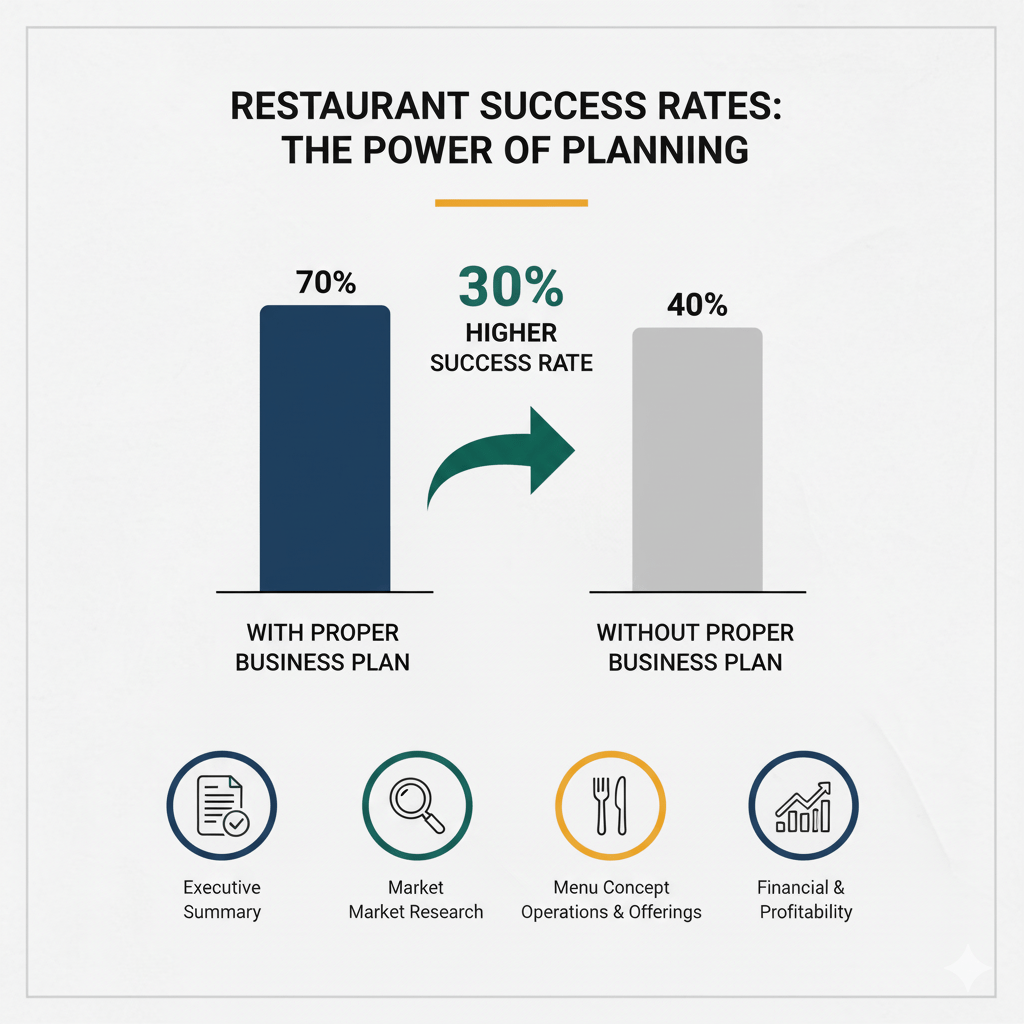
Industry statistics reveal that restaurants with comprehensive business plans are 30% more likely to achieve profitability in their first two years. In an industry where approximately 60% of new restaurants fail within the first year, this planning advantage can distinguish between success and closure.
2. Essential Elements of a Successful Restaurant Business Plan
While templates provide structure, understanding the core components of a restaurant business plan helps you customize your approach. A well-designed Restaurant Business Plan Template can streamline this process and ensure you cover every effective restaurant business plan includes these key elements:
Executive Summary
Though appearing first, this concise overview of your business plan is typically written last. It highlights your concept, target market, competitive advantage, team strengths, and financial overview—all condensed into 1-2 compelling pages that grab investors’ attention.
Company Description
This section details your restaurant concept, legal structure, location strategy, and overall mission. It articulates your restaurant’s “story” and explains why your concept will succeed in your chosen market.
Market Analysis
A data-driven examination of your target market, including demographic analysis, competitor research, and industry trends. This section demonstrates your understanding of the restaurant landscape and identifies your niche.
Menu & Service Description
Beyond just listing dishes, this section outlines your culinary philosophy, pricing strategy, menu psychology, service style, and how these elements align with your target customers’ expectations.
Marketing Strategy
Your plan for attracting and retaining customers, including branding, digital marketing, community engagement, loyalty programs, and promotional calendars with associated costs.
Organizational Structure
Details about management, staffing plans, hiring strategies, training programs, and operational systems that will ensure consistent quality and service.
Financial Projections
The numbers that make or break your plan, including startup costs (typically $175,000-$750,000 for independent restaurants), detailed revenue forecasts, expense budgets, break-even analysis, cash flow projections, and potential return on investment.

3. Restaurant Business Plan Templates by Type
Different restaurant concepts require tailored approaches to business planning. Below, you’ll find specialized templates for various restaurant types in Docx and Pdf formats to suit your preferences.
a. Full-Service Restaurant Template
Full-service restaurants involve higher investment, more complex staffing structures, and detailed service protocols. This comprehensive template addresses the specific challenges of table-service establishments.
Key features:
- Detailed front-of-house and back-of-house staffing models
- Table turnover rate calculations
- Bar program development guidelines
- Service standards documentation
- Reservation system integration planning
Download options: Word Template | PDF Example
b. Fast Food Restaurant Template
Fast food concepts prioritize operational efficiency, standardized processes, and volume-based profitability. This template focuses on streamlining systems and maximizing throughput.
Key features:
- Drive-thru optimization strategies
- Kitchen workflow diagrams
- Speed-of-service metrics
- Simplified menu engineering templates
- Labor efficiency calculations
Download options: Word Template | PDF Example
c. Food Truck Template
Food trucks face unique challenges, including mobility, limited space, and variable locations. This specialized template addresses the distinctive aspects of mobile food service businesses.
Key features:
- Permit and location planning calendars
- Commissary kitchen arrangements
- Weather contingency planning
- Mobile point-of-sale systems comparison
- Event and catering opportunity assessment
Download options: Word Template | PDF Example
d. Pop-up Restaurant Template
Pop-up restaurants offer lower initial investment but require creative approaches to temporary spaces, limited-time offerings, and building a following without a permanent location.
Key features:
- Venue selection criteria and negotiation guides
- Timeline for temporary operation planning
- Equipment rental vs. purchase analysis
- Social media-driven marketing strategies
- Path to permanence planning (if applicable)
Download options: Word Template | PDF Example
e. Café/Bakery Template
Cafés and bakeries balance retail and service elements with production schedules, often featuring distinct morning and afternoon business patterns.
Key features:
- Production scheduling templates
- Display case inventory rotation systems
- Coffee program development guides
- Retail product margin analysis
- Customer flow optimization for counter service
Download options: Word Template | PDF Example
Prefer to start from a working draft? The templates above give you the structure; the AI business plan generator fills that structure in with your own concept, costs and projections, so you can adapt a real draft instead of formatting a blank file.
4. Step-by-Step Guide to Completing Each Section
Now that you have your Restaurant Business Plan Template, let’s walk through how to complete each section of your restaurant business plan effectively. Using a Restaurant Business Plan Template as your starting point, this guidance applies regardless of which restaurant type you’re developing.
a. Executive Summary
Though appearing first, write this last. Your executive summary should be a compelling “elevator pitch” that makes readers want to learn more.
How to complete this section:
- Begin with an attention-grabbing concept statement in 1-2 sentences
- Include your mission statement that captures your restaurant’s purpose
- Summarize your unique selling proposition—what makes your restaurant different
- Briefly outline your target market and why they’ll choose your establishment
- Highlight key financial projections, including total investment required, projected break-even point, and expected ROI
- Introduce your leadership team’s relevant experience and strengths
Example: “Urban Harvest will be Chicago’s first farm-to-table fast casual concept featuring exclusively locally-sourced ingredients at accessible price points. Led by Chef Maria Rodriguez (formerly of Michelin-starred Terrain) and Operations Director James Washington (who scaled Regional Eats to 12 locations), Urban Harvest will serve the underserved West Loop lunch crowd of 45,000+ professionals seeking healthy, sustainable dining options. With projected first-year sales of $1.2M and a break-even point at month 9, Urban Harvest represents an opportunity to lead the city’s sustainable dining movement while delivering a projected 22% ROI by year three.”
b. Company Description
This section establishes your restaurant’s identity, legal foundation, and overall vision.
How to complete this section:
- Detail your restaurant’s legal structure (LLC, corporation, partnership)
- Explain your concept in depth, including cuisine, service style, and atmosphere
- Describe your proposed location and why it suits your concept
- Include your restaurant’s values and how they’ll inform operations
- Outline short-term goals (1 year), medium-term goals (3 years), and long-term vision (5+ years)
Remember to include relevant restaurant industry information that contextualizes your concept. For example, if you’re opening a plant-based restaurant, cite statistics about vegetarian and vegan dining growth in your market.
c. Market Analysis
This research-heavy section demonstrates your understanding of your market and competitive landscape.
How to complete this section:
- Conduct and summarize a target market analysis with demographic details
- Create customer personas representing your ideal patrons
- Perform a detailed restaurant competitive analysis of direct and indirect competitors
- Complete a SWOT analysis (Strengths, Weaknesses, Opportunities, Threats)
- Analyze industry and local market trends that support your concept
- Include relevant market size statistics for your location and concept
Use specific data points rather than generalizations. For example, instead of “many young professionals in the area,” write “37% of residents within a 3-mile radius are professionals aged 25-40 with an average household income of $87,000.”
d. Menu & Service Description
Your menu and service model are the heart of your restaurant concept and deserve detailed attention.
How to complete this section:
- Include a sample menu with pricing strategy explained
- Describe your culinary approach and food sourcing philosophy
- Detail your service model and customer experience journey
- Explain how your menu addresses dietary trends and restrictions
- Include photos or professional renderings of signature dishes
- Provide menu engineering analysis showing food cost percentages and profit contribution by category
This section should demonstrate that your menu aligns with your target market’s preferences and price sensitivity while maintaining healthy profit margins.
e. Marketing Strategy
Your plan for attracting and retaining customers must be specific, actionable, and budgeted.
How to complete this section:
- Define your brand identity, including visual elements and voice
- Detail your pre-opening marketing campaign timeline and tactics
- Outline your digital marketing strategy (website, SEO, social media, email)
- Describe community engagement and local marketing initiatives
- Explain your customer retention and loyalty programs
- Create a 12-month marketing calendar with budget allocations
- Establish key performance indicators for measuring marketing effectiveness
Include specific marketing costs in your plan. For example: “Monthly social media advertising budget: $1,200, allocated 60% to Instagram, 30% to Facebook, and 10% to TikTok based on our target demographic usage patterns.”
f. Organizational Structure
This section outlines how your restaurant will be staffed, managed, and operated daily.
How to complete this section:
- Create an organizational chart showing reporting relationships
- Develop job descriptions for key positions
- Outline your hiring process and employee retention strategies
- Detail training programs for both technical skills and company culture
- Explain management systems for scheduling, inventory, and quality control
- Include policies that will differentiate your workplace culture
Address the current restaurant staffing challenges directly. For example: “In recognition of the industry-wide staffing challenges, our compensation model includes base pay 20% above market average, health benefits for all employees working 25+ hours weekly, and a profit-sharing program to reduce turnover and build team investment in our success.”
⚡ Skip Manual Planning – Generate in 10 Minutes
While this guide helps you create a restaurant business plan manually, our AI can generate a complete, investor-ready plan with financial projections, market analysis, and industry-specific insights in just 10 minutes.
See How AI Creates Better Plans →✓ Used by 2,500+ restaurants ✓ $8M+ funding raised ✓ 10-minute generation
g. Financial Projections
This critical section must be thorough, realistic, and based on industry benchmarks and research.
How to complete this section:
- Create a detailed startup costs spreadsheet (lease, renovations, equipment, permits, initial inventory, etc.)
- Develop monthly sales projections for the first year, then quarterly for years 2-3
- Build a comprehensive operating expense budget including rent, labour, food costs, utilities, etc.
- Calculate key financial ratios, including food cost percentage, labour cost percentage, and prime cost
- Perform break-even analysis showing when the restaurant will become profitable
- Include cash flow projections to ensure solvency during the startup phase
- Prepare a profit and loss statement, balance sheet, and cash flow statement
Be conservative in your projections. Typical restaurant profit margins range from 3-5% of total revenue, and your financial models should reflect this reality rather than overly optimistic scenarios that might undermine your credibility with investors. Need help generating accurate projections? Try our AI business plan generator.

5. Real-World Examples (with visuals of actual business plans)
Learning from successful restaurant business plans can provide invaluable insights for your planning process. Here are annotated examples from various restaurant types that secured funding and achieved success.
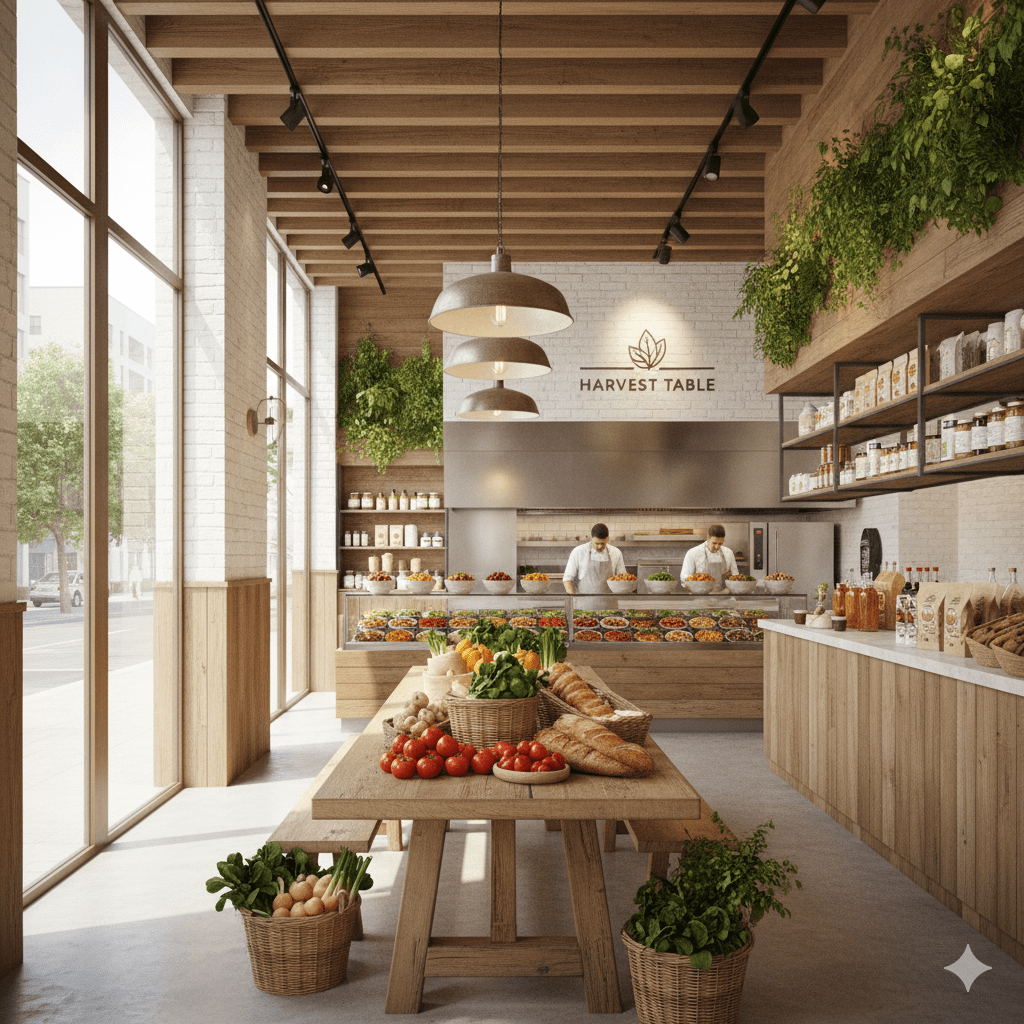
Full-Service Restaurant Example: Harvest Table
Harvest Table, a farm-to-table concept in Portland, secured $850,000 in investor funding with its detailed business plan. Key elements that impressed investors included:
- A compelling executive summary that clearly articulated their unique position in Portland’s competitive dining scene
- Detailed supplier relationships with 12 local farms, creating both a supply chain advantage and marketing story
- Conservative financial projections showing a 24-month path to profitability
- Thorough competitive analysis of similar concepts with specific strategies to differentiate
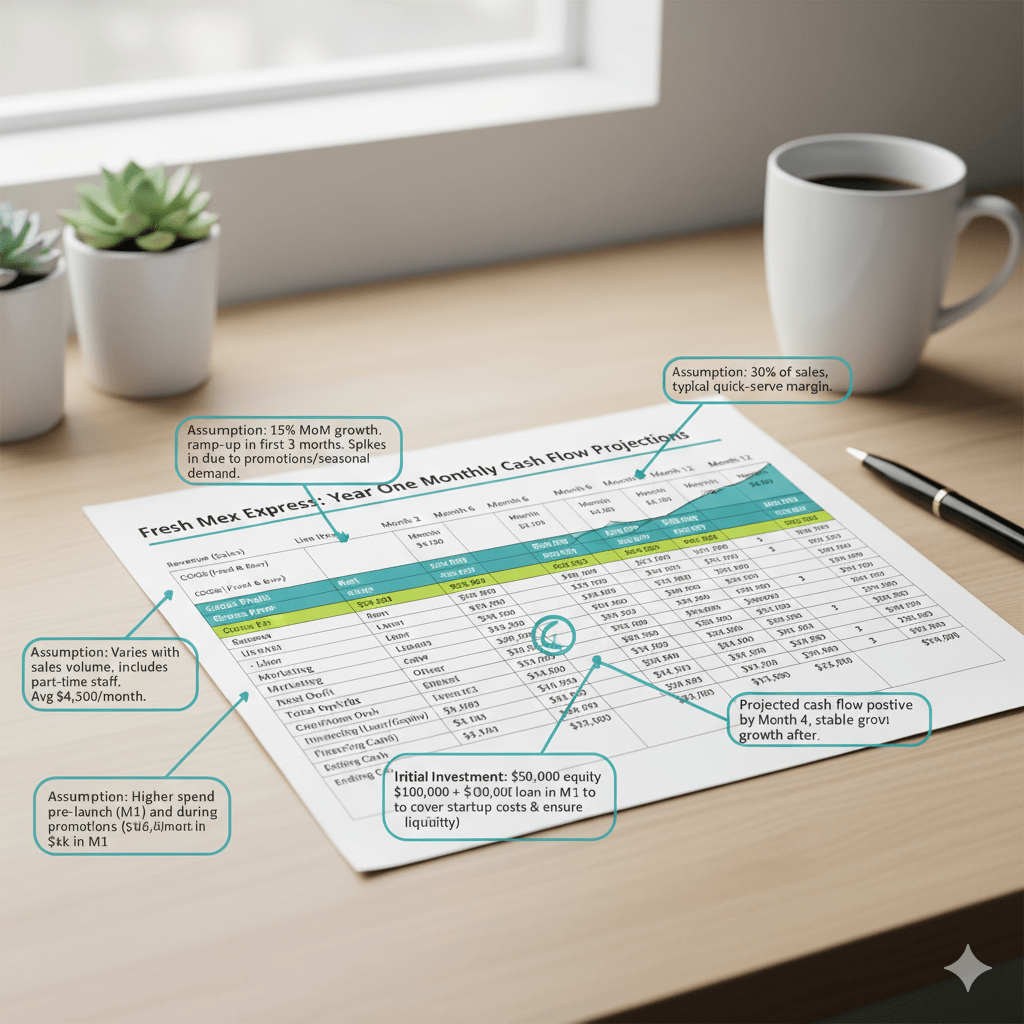
Fast Casual Example: Fresh Mex Express
This quick-service Mexican concept secured SBA funding and has since expanded to three locations. Their business plan stood out for:
- Detailed operational systems that demonstrated scalability from day one
- Clear brand identity with professional design elements throughout the plan
- Menu engineering that achieved food costs of 28% while maintaining quality
- Location strategy with demographic analysis for their first three planned locations
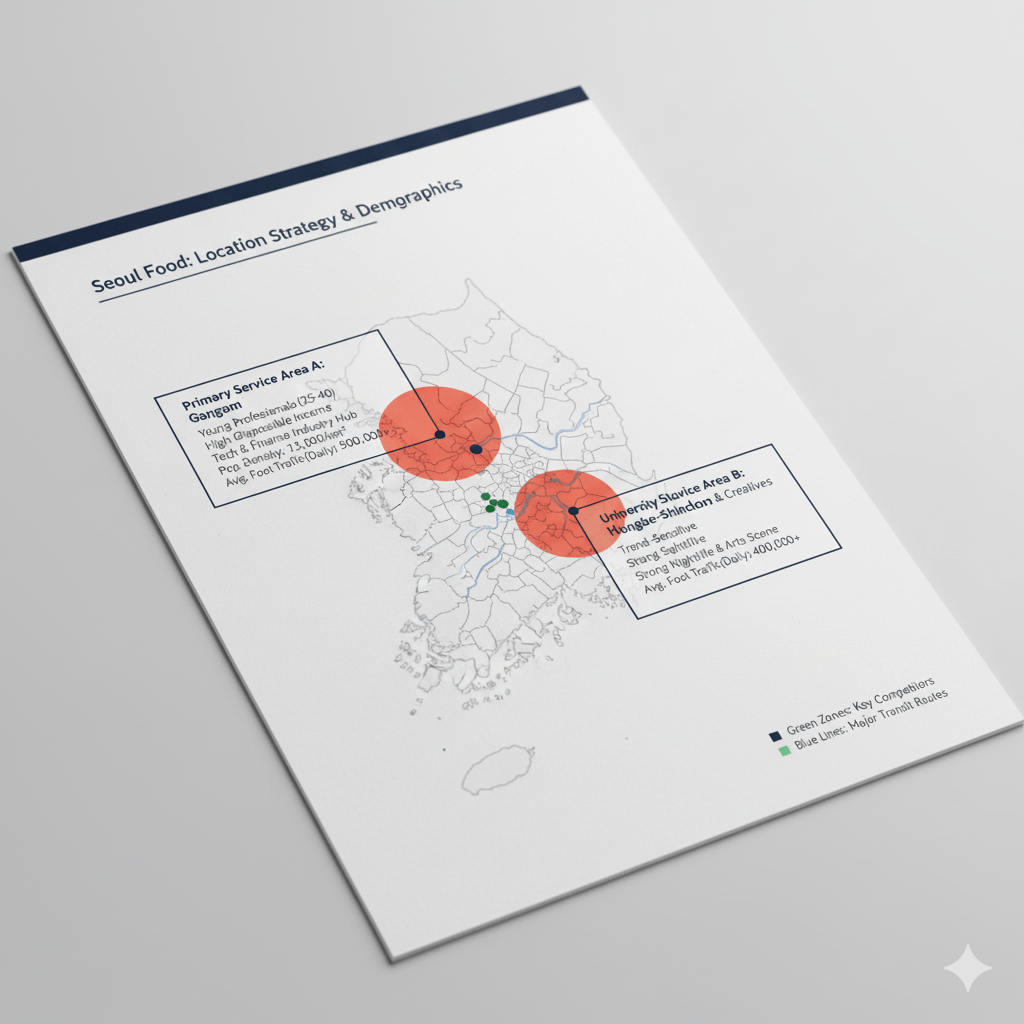
Food Truck Example: Seoul Food
This Korean-fusion food truck secured $120,000 in startup funding and became profitable within 6 months. Their business plan excelled with:
- Detailed mobility strategy showing primary locations, events, and expected customer volume
- Social media marketing plan that built a following before launch
- Commissary kitchen arrangement that allowed for prep efficiency and catering expansion
- Clear pathway to potential brick-and-mortar expansion in year three
6. Expert Tips from Successful Restaurant Owners
We interviewed restaurant owners who have successfully launched and scaled their concepts to share their business planning insights.
On Financial Planning
“Double your expected startup costs and triple your timeline. I’ve opened four restaurants, and not once have we come in under budget or ahead of schedule. Building this buffer into your plan shows investors you understand the realities of restaurant development.” – James Chen, Owner of Blue Ginger Restaurant Group
On Market Research
“Before writing a single word of my business plan, I spent three months working in a restaurant similar to my concept in another city. This hands-on research revealed operational challenges I never would have anticipated and completely changed my service model. No amount of theoretical research can replace practical experience.” – Maria Rodriguez, Owner of Alma Cocina
On Menu Development
“Your initial business plan should include menu engineering that balances what I call the ‘stars’ (popular, high-profit items), ‘workhorses’ (popular, lower-profit items), ‘puzzles’ (less popular, high-profit items), and ‘dogs’ (less popular, low-profit items). This strategic approach to menu design increased our profitability by 22% compared to our original concept.” – Thomas Washington, Executive Chef and Co-Owner, Provision & Co.
On Staffing Projections
“The most common mistake in restaurant business plans is underestimating labor costs and training time. In our business plan, we budgeted for 30% higher labor costs in the first three months than our projected steady state, plus dedicated training staff. This upfront investment paid off with lower turnover and consistent quality from week one.” – Sophia Lin, Founder, Rise Breakfast Co.
On Post-Pandemic Planning
“Any restaurant business plan in today’s environment must have robust contingency scenarios. We included three financial models: optimistic, realistic, and crisis. Having that crisis model ready when COVID hit allowed us to pivot immediately to a sustainable takeout model rather than panicking.” – Robert James, Owner, Provisions Urban Eatery
7. Interactive Financial Planning Tools
Creating accurate financial projections is often the most challenging aspect of restaurant business planning. These interactive tools will help you develop realistic numbers for your plan. For a faster, AI-powered approach to generating complete financial projections, try our business plan generator at tools.bizplanaipro.com.
Restaurant Startup Cost Calculator
This comprehensive tool helps you estimate all initial costs, including:
- Real estate (purchase or lease deposits plus improvements)
- Equipment (kitchen, bar, dining room, POS systems)
- Initial inventory (food, beverage, smallwares)
- Professional services (legal, accounting, design)
- Permits and licenses
- Initial marketing and branding
- Working capital reserve
Access the Startup Cost Calculator
Menu Price Engineering Tool
This spreadsheet helps you optimize your menu pricing by:
- Calculating precise food costs for each menu item
- Determining ideal selling prices based on target food cost percentages
- Analyzing contribution margins by menu category
- Projecting overall food cost percentage based on expected sales mix
Access the Menu Price Engineering Tool
Labor Cost Modeling Worksheet
This tool helps you create accurate labour budgets by:
- Building shift templates with proper staffing levels
- Calculating hourly, weekly, and monthly labour costs
- Projecting labour as a percentage of sales
- Modelling different service styles and their labour requirements
Access the Labor Cost Modeling Worksheet
Break-Even Analysis Calculator
This essential tool helps you determine:
- Your restaurant’s monthly break-even point in sales dollars
- Number of customers needed daily to achieve profitability
- Impact of different pricing strategies on your break-even point
- Sensitivity analysis for changes in fixed and variable costs
Access the Break-Even Analysis Calculator
Cash Flow Projection Template
This critical planning tool helps you:
- Project month-by-month cash inflows and outflows
- Identify potential cash shortfalls before they occur
- Plan for seasonal fluctuations in business
- Determine total funding needed before reaching positive cash flow
Access the Cash Flow Projection Template
Success Story
“Used BizPlan AI Pro for our food truck plan. Secured $120K SBA loan in 3 weeks.”
— Marco Santos, Seoul Tacos Food Truck
“The financial projections were exactly what the bank needed. Saved me 40+ hours of spreadsheet work and the plan looked more professional than anything I could create manually.”
Start Your Restaurant Plan Free →8. Common Mistakes to Avoid
Even the most thoughtful restaurant business plans can be undermined by common pitfalls. Here’s how to avoid the mistakes that frequently derail restaurant startups:
Unrealistic Financial Projections
Many restaurant plans project profitability too soon or overestimate sales while underestimating costs.
How to avoid this: Use industry benchmarks (like the National Restaurant Association’s Restaurant Industry Operations Report) for realistic ratios. The project is reaching only 70% of your expected sales in the first three months, and build in a 10% contingency for all costs.
Insufficient Market Research
Generic statements about target customers and competition reveal a lack of thorough research.
How to avoid this: Conduct formal market research, including competitor secret shopping, customer surveys in your target area, and analysis of similar concepts in comparable markets. Include specific data points rather than generalizations.
Vague Concept Definition
Many restaurant plans fail to articulate what makes the concept unique and compelling clearly.
How to avoid this: Create a clear, concise concept statement that explains your restaurant in one paragraph. Test this statement with potential customers to ensure it resonates and is easily understood. Include visual elements that bring your concept to life.
Overlooking Operational Details
Beautiful concepts fail without systems for consistent execution.
How to avoid this: Include detailed operational plans covering kitchen workflow, service standards, inventory management, and quality control systems. Create sample checklists and protocols that demonstrate how you’ll maintain consistency.
Inadequate Staffing Plans
Many plans underestimate staffing needs and the challenges of building a strong team.
How to avoid this: Develop detailed staffing models for different dayparts, comprehensive training plans, and competitive compensation strategies. Address current industry staffing challenges directly with innovative retention approaches.
Neglecting Marketing Specifics
“If we build it, they will come” is not a marketing strategy.
How to avoid this: Create a month-by-month marketing calendar for your first year with specific tactics, costs, and expected outcomes. Include both pre-opening and ongoing marketing initiatives with measurable goals.
Missing Contingency Plans
Restaurant plans often assume everything will go according to the ideal scenario.
How to avoid this: Include “What if?” scenarios addressing potential challenges like construction delays, slower-than-projected sales, key staff departures, or supply chain disruptions. Outline specific response strategies for each scenario.
9. Adapting Your Plan for Investors vs. Internal Use
Your restaurant business plan may need different versions depending on its purpose. Here’s how to adapt your plan for different audiences while maintaining its core integrity.
For Bank Loans
Banks focus primarily on risk assessment and your ability to repay the loan.
Emphasize:
- Detailed financial projections with conservative assumptions
- Your personal financial history and creditworthiness
- Collateral and personal guarantees
- Industry experience of key team members
- Thorough market research supporting your sales projections
Include: Three years of detailed financial projections, personal financial statements, and specific use of funds with quotes/estimates.
For Angel Investors
Individual investors often decide based on financial potential and personal connection to your concept.
Emphasize:
- Your passion and unique vision
- Growth potential and scalability
- Competitive advantages and barriers to entry
- Clear exit strategy or ROI timeline
- Social proof like industry endorsements or early customer interest
Include: Visual elements that bring your concept to life, team bios that highlight relevant successes, and testimonials from industry experts.
For Restaurant Groups or Strategic Partners
Established industry players evaluate concepts through an operational and strategic lens.
Emphasize:
- Operational systems and scalability
- How your concept complements their existing portfolio
- Efficiency metrics like sales per square foot and turns per shift
- Brand differentiation and target demographic alignment
- Potential for multiple locations or concept extensions
Include: Detailed operational plans, specific expansion timelines, and analysis of how your concept fills a gap in their current offerings.
For Internal Planning
When the plan is primarily for your team’s guidance, focus on actionable details.
Emphasize:
- Specific action items with responsible parties and deadlines
- Detailed standard operating procedures
- Training systems and quality standards
- Key performance indicators for each department
- Communication and decision-making protocols
Include: Operational checklists, training materials, and a detailed timeline for pre-opening and first year milestones.
10. Conclusion & Next Steps
Creating a comprehensive restaurant business plan is an investment of time that pays dividends throughout your restaurant’s life. Using a Restaurant Business Plan Template as your foundation, your business plan is not just a document for securing funding—it’s the strategic foundation that will guide your decisions, help you measure success, and enable you to adapt to changing conditions. While restaurants and hotels share many hospitality industry similarities, each requires unique planning considerations. If you’re also exploring hotel development, check out our hotel business plan template for comprehensive guidance tailored to hotel operations.
As you finalize your Restaurant Business Plan Template, remember these key principles:
- Be thorough but concise: Include all essential information while keeping your plan focused and readable.
- Stay realistic: Base projections on industry benchmarks and thorough research rather than optimistic assumptions.
- Emphasize differentiation: Clearly articulate what makes your restaurant unique in a competitive marketplace.
- Plan for challenges: Include contingency strategies for common restaurant obstacles.
- Update regularly: Your business plan should evolve as your restaurant grows and market conditions change.
With the templates, examples, and expert guidance provided in this guide, you now have the tools to create a restaurant business plan that helps secure funding and serves as your roadmap to success in the dynamic and rewarding world of restaurant ownership.
Your Next Steps:
- Download the template that best matches your restaurant concept
- Complete each section using the step-by-step guidance provided
- Utilize the interactive financial tools to create realistic projections
- Have industry professionals and potential customers review your plan
- Refine based on feedback before presenting to potential funders
Remember that a great restaurant starts with a great plan. By investing time now in creating a comprehensive business plan, you’re laying the groundwork for a successful, sustainable restaurant operation that can weather challenges and capitalize on opportunities in this exciting industry.
Ready to download your restaurant business plan template and start? Select the option that best fits your concept from section 3 above and begin your journey toward restaurant ownership today. Or skip the manual work and generate your complete business plan in minutes.
Frequently Asked Questions
How long should a restaurant business plan be?
What are typical restaurant startup costs?
How do I create financial projections without existing sales data?
Should I hire someone to write my restaurant business plan?
How often should I update my restaurant business plan?
What’s the most important section of a restaurant business plan?
Can I use the same business plan for different investors?
Do I need a business plan if I’m self-funding my restaurant?
Do I need a business plan to get a restaurant loan?
Yes. Banks and SBA lenders require detailed business plans before approving restaurant loans. Your plan demonstrates repayment ability and reduces lender risk. Most require 3 years of financial projections, market analysis, and proof of industry experience.
Can AI write my restaurant business plan?
AI tools like BizPlan AI Pro can generate comprehensive restaurant business plans in 10-15 minutes by analyzing your concept and industry data. However, you should review and customize AI output with your specific local market insights and personal vision for best results.
What food cost percentage is normal for restaurants?
Target food costs of 28-35% of revenue for most restaurant types. Fine dining may run 35-40% while fast casual aims for 25-30%. Your business plan should reflect industry-standard ratios for your concept. Prime cost (food + labor) should stay under 65%.
Ready to Launch Your Restaurant Dream?
Get your professional restaurant business plan completed in minutes with our AI-powered business plan generator. Based on proven templates used by successful restaurants nationwide.
✓ Professional formatting ✓ Industry benchmarks included ✓ Investor-ready in minutes