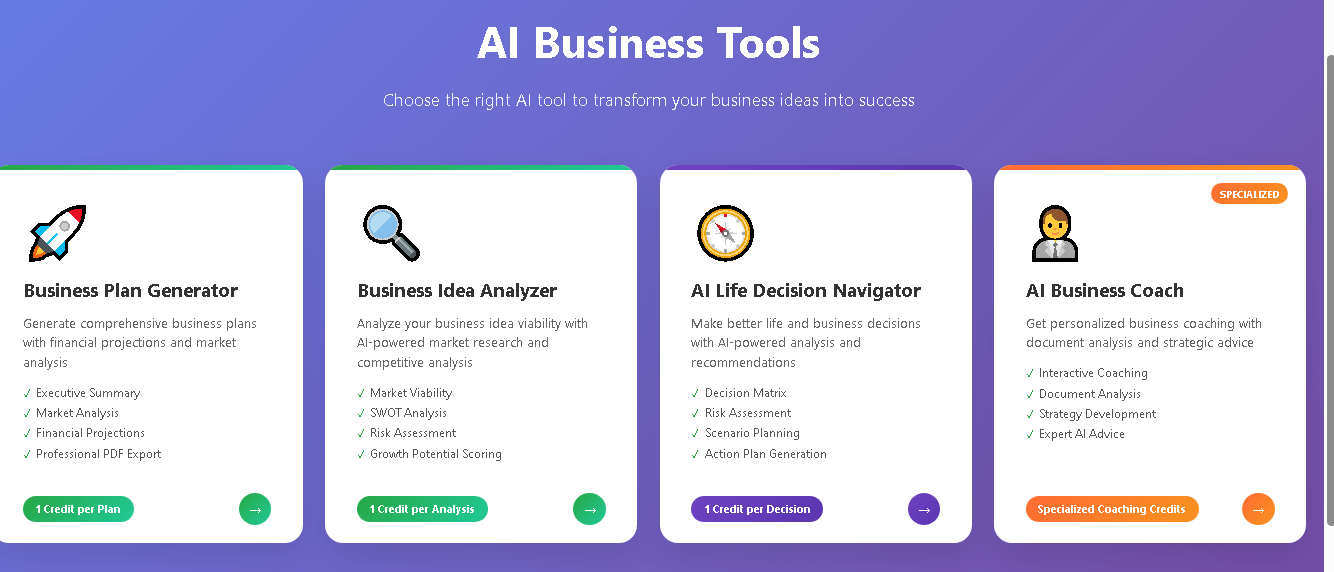
New Business Plan Template | BizPlan AI Pro
Introduction: What Is a New Business Business Plan Template?
Launching a New Business is an exhilarating venture that blends creativity, market insight, and disciplined execution. A business plan template designed specifically for a New Business serves as a living blueprint that captures the essence of the idea, outlines the path to profitability, and convinces investors, lenders, and partners that the venture is worth backing. Unlike generic templates, a New Business plan zeroes in on the unique challenges of starting from scratch—limited brand equity, the need for rapid market validation, and the pressure to secure early cash flow. By following a structured template, founders can translate abstract concepts into concrete milestones, allocate resources wisely, and anticipate obstacles before they become costly setbacks.
Key Sections of a New Business Business Plan
A comprehensive New Business plan is divided into distinct sections, each addressing a critical facet of the startup journey. Below is a detailed breakdown of the essential components that every aspiring entrepreneur should include.
Executive Summary
The executive summary is the first impression. It condenses the entire plan into a compelling narrative that highlights the business concept, target market, competitive advantage, financial needs, and projected returns. For a New Business, this section should also emphasize the founder’s background, the problem being solved, and a concise “ask” for funding.
Market Analysis
Understanding the market landscape is vital for any New Business. This section should cover:
- Industry size and growth trends
- Target customer demographics and psychographics
- Competitive mapping (direct, indirect, and potential substitutes)
- Market gaps and the unique value proposition that fills them
Data‑driven insights demonstrate that the founder has done homework and can position the venture for sustainable growth.
Products & Services
Describe the core offering in detail, focusing on features, benefits, and differentiation. For a New Business, it’s crucial to explain the development roadmap, any intellectual property (patents, trademarks), and the plan for scaling the product line or service suite as demand grows.
Operations & Management
Operational efficiency can make or break a New Business. This section should outline:
- Location strategy (physical storefront, co‑working space, or fully remote)
- Supply chain logistics and vendor relationships
- Key hires, organizational chart, and management responsibilities
- Technology stack and tools that support daily operations
Including a timeline for hiring and operational milestones helps investors gauge the founder’s execution capability.
Financial Projections
Financial modeling is the quantitative heart of the plan. Provide three‑year forecasts for:
- Revenue streams (product sales, subscription fees, service contracts)
- Cost of goods sold (COGS) and operating expenses
- Cash flow statements, break‑even analysis, and profit margins
Accuracy and realism are paramount; overly optimistic numbers can erode credibility.
Legal & Licensing Requirements
Every New Business must navigate a web of legal obligations that vary by industry and jurisdiction. This section should list all necessary permits, registrations, and compliance measures, such as:
- Business entity formation (LLC, corporation, partnership)
- Federal and state tax identification numbers
- Industry‑specific licenses (health department permits for food, professional licenses for consulting, etc.)
- Intellectual property filings and data protection policies
Addressing these items up front signals to stakeholders that the venture is built on a solid legal foundation.
Funding Strategy
Detail the capital required to launch and sustain the New Business until it reaches cash‑flow positivity. Include:
- Breakdown of use of funds (product development, marketing, staffing, working capital)
- Preferred financing sources (angel investors, venture capital, SBA loans, crowdfunding)
- Proposed ownership structure and exit strategy for investors
| Funding Source | Typical Amount | Pros | Cons | Best Fit For |
|---|---|---|---|---|
| Personal Savings | Amounts vary by lender and borrower | Full control, no dilution | Limited capital, high personal risk | Bootstrapped startups, low‑cost services |
| Friends & Family | Amounts vary by lender and borrower | Quick access, flexible terms | Potential strain on personal relationships | Early‑stage consumer products |
| Angel Investors | Amounts vary by lender and borrower | Mentorship, industry connections | Equity dilution, due diligence process | Tech platforms, scalable SaaS |
| Venture Capital | Amounts vary by lender and borrower | Large capital infusion, growth expertise | Significant equity dilution, high expectations | High‑growth, disruptive innovations |
| SBA Loan | Amounts vary by lender and borrower | Lower interest rates, government backing | Lengthy approval, collateral required | Established service firms, franchising |
| Crowdfunding | Amounts vary by lender and borrower | Market validation, community building | All‑or‑nothing funding, platform fees | Consumer products, creative ventures |
| Illustrative only — funding amounts, rates and terms vary by lender, product, borrower profile, geography and date. This is not a quote or an offer; confirm current terms directly with the lender or program. | ||||
How to Use & Customize Your New Business Business Plan: Step‑by‑Step Guide
While the template provides a solid framework, every New Business has its own nuances. Follow this systematic approach to tailor the plan to your specific market, product, and growth strategy.
Step 1: Define Your Vision and Mission
Start with a clear, concise statement that captures the purpose of the New Business and the long‑term impact you aim to achieve. Use the SMART criteria (Specific, Measurable, Achievable, Relevant, Time‑bound) to ensure the vision is actionable.
- Example: “To empower small‑town retailers with an AI‑driven inventory platform that reduces stockouts by 40% within two years.”
Step 2: Conduct Deep Market Research
Gather primary data (surveys, interviews) and secondary data (industry reports, government statistics). Validate assumptions about customer pain points, willingness to pay, and competitive dynamics. Document sources to enhance credibility.
Step 3: Craft a Compelling Value Proposition
Translate research insights into a succinct value proposition that differentiates your New Business. Focus on the “why now” factor—what market shift or technology trend makes your solution timely?
- Highlight tangible benefits (cost savings, time efficiency, revenue growth)
- Address objections preemptively (security concerns, integration hurdles)
Step 4: Build Detailed Financial Models
Use spreadsheet software to create month‑by‑month cash flow forecasts for the first 12‑24 months, then annual projections for years 2‑3. Incorporate realistic assumptions for:
- Customer acquisition cost (CAC)
- Lifetime value (LTV)
- Churn rate (for subscription models)
- Seasonality effects (retail, tourism)
Run sensitivity analyses to show how changes in key variables affect profitability.
Step 5: Tailor the Plan to Your Industry Niche
Every industry has signature elements that must be reflected in the plan. Below are quick customization tips for three common New Business categories:
| Industry | Unique Section | Key Considerations |
|---|---|---|
| Retail (e‑commerce) | Omni‑Channel Strategy | Website UX, fulfillment logistics, return policies, digital marketing ROI |
| Technology SaaS | Product Roadmap & Scalability | API integrations, cloud hosting costs, subscription pricing tiers, churn mitigation |
| Service Consulting | Service Delivery Model | Client onboarding workflow, billable hours tracking, knowledge‑base development |
Step 6: Review Legal & Compliance Checklist
Before finalizing the document, run a compliance audit:
- Confirm business entity registration with the Secretary of State.
- Secure all required industry permits (e.g., food handler’s license for a café, health‑care provider license for a tele‑medicine startup).
- Draft founder agreements, IP assignment, and employee contracts.
- Ensure data privacy compliance (GDPR, CCPA) if handling personal information.
Step 7: Polish, Format, and Share
Use a clean, professional layout—consistent fonts, ample white space, and visual aids (charts, graphs, tables). Convert the final version to PDF for distribution, but keep an editable master file for future updates as the New Business evolves.
FAQs About Starting a New Business and Writing Its Plan
What is the minimum length for a New Business plan?
There is no strict rule, but a well‑rounded plan typically runs 15‑30 pages, including appendices. The key is depth of analysis, not page count. Investors expect enough detail to assess risk and opportunity.
Do I need a professional writer or consultant to create a business plan?
While you can draft a solid plan yourself, a professional can help refine financial models, polish the narrative, and ensure industry‑specific compliance. If budget is tight, leverage free resources from SBA, SCORE, or local Small Business Development Centers.
How often should I update my New Business plan?
Review and revise the plan quarterly during the first 18 months, then semi‑annually once the business stabilizes. Updates should reflect actual performance versus projections, new market insights, and any pivots in strategy.
What are the most common mistakes new entrepreneurs make in their plans?
Typical pitfalls include:
- Over‑optimistic revenue forecasts without a clear acquisition strategy.
- Neglecting cash‑flow analysis, leading to liquidity crises.
- Skipping the competitive analysis, which makes the value proposition appear weak.
- Failing to address legal and licensing requirements, causing costly delays.
Can I use the same plan for multiple funding rounds?
Yes, but each round may require a tailored version. Early seed decks focus on vision and prototype, while Series A or B plans demand deeper financials, market traction data, and expanded operational details.
How do I determine the appropriate valuation for my New Business?
Valuation methods vary by stage:
- Pre‑revenue: Use the Berkus Method or Scorecard Valuation to assign value to qualitative factors.
- Revenue‑generating: Apply discounted cash flow (DCF) or comparable company multiples.
- Growth stage: Consider venture capital “rule of 40” (growth rate + profit margin ≥ 40%).
Engage a financial advisor or experienced mentor to validate assumptions.
Is a business plan required to register my New Business?
No, registration with the state does not require a business plan. However, banks and investors typically request a comprehensive plan before approving loans or equity investments.
What legal structure is best for a New Business?
The optimal structure depends on liability concerns, tax preferences, and funding goals:
- LLC: Flexible, limited liability, pass‑through taxation—ideal for solo founders or small teams.
- C‑Corporation: Preferred by venture capitalists due to easy issuance of multiple share classes.
- S‑Corporation: Allows pass‑through taxation while limiting the number of shareholders.
Consult a corporate attorney to choose the right entity.
How can I protect my intellectual property as a New Business?
Take these steps early:
- Conduct a trademark search and file for a federal trademark.
- If you have a novel invention, file a provisional patent within 12 months of conception.
- Use non‑disclosure agreements (NDAs) with partners, contractors, and early employees.
- Maintain clear documentation of development timelines and authorship.
What are the key performance indicators (KPIs) to track in the first year?
Focus on metrics that reflect both growth and sustainability:
- Customer Acquisition Cost (CAC)
- Monthly Recurring Revenue (MRR) or sales volume
- Gross Margin
- Burn Rate and Runway (months of cash left)
- Net Promoter Score (NPS) for customer satisfaction
Regularly reviewing these KPIs helps you pivot quickly and keep investors informed.
Frequently Asked Questions
What is a New Business plan template?
A New Business plan template is a structured document that outlines your startup’s concept, market strategy, operations, financial projections, and funding needs to guide launch and attract investors.
Why is a dedicated New Business plan better than a generic template?
It focuses on the unique aspects of a startup, such as early-stage market validation, product development milestones, and initial cash‑flow challenges, making it more relevant and persuasive.
What key sections should a New Business plan include?
Executive summary, business description, market analysis, competitive advantage, marketing & sales strategy, operations plan, management team, financial forecasts, and funding requirements.
How detailed should the financial projections be for a new venture?
Provide at least three years of projected income statements, cash flow, and balance sheets, with realistic assumptions, break‑even analysis, and sensitivity scenarios.
How can a New Business plan help secure funding?
It demonstrates a clear vision, viable market, solid revenue model, and a realistic path to profitability, giving investors confidence in the startup’s potential ROI.