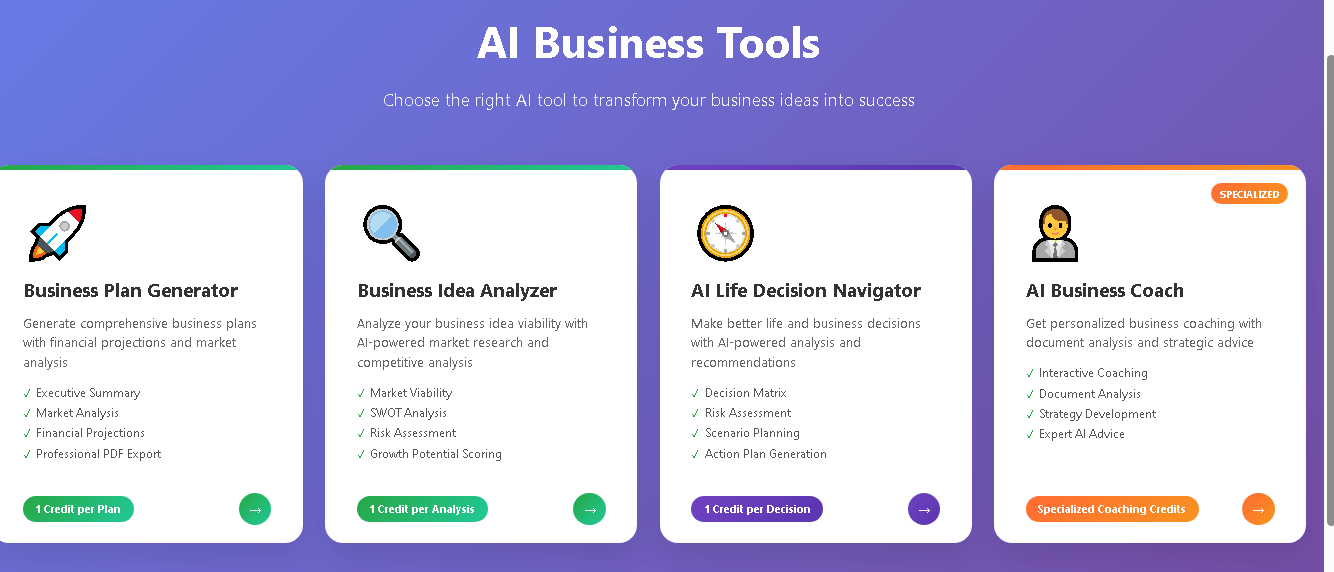
Freight Brokerage Business Plan Template | BizPlan AI Pro
What Is the Current State of the Freight Brokerage Industry in 2026?
Freight brokerage in the United States and the broader global market has evolved into a technology‑driven, high‑margin service that connects shippers with carriers across all modes—truckload, less‑than‑truckload (LTL), intermodal, and air freight. In 2026, the sector processes more than 15 billion shipments annually, generating an estimated $120 billion in gross revenue. Digital freight platforms, AI‑enabled rate optimization, and real‑time visibility tools have lowered transaction costs and increased carrier utilization by an average of 12 % year‑over‑year.
Key trends shaping the landscape include:
- AI‑powered matchmaking: Algorithms predict capacity gaps and suggest optimal carrier‑shipper pairings, reducing deadhead miles.
- ESG pressure: Shippers demand carbon‑neutral routing; brokers that provide emissions reporting gain premium contracts.
- Regulatory harmonization: The FMCSA’s updated Safety Measurement System (SMS) and the EU’s Green Freight Initiative create comparable compliance baselines for cross‑border brokers.
- SBA‑friendly financing: The Small Business Administration’s 7(a) loan program now includes a dedicated line for technology upgrades in freight brokerage.
How Do You Identify Target Demographics and Build a Competitive Advantage?
Primary Customer Segments
- Mid‑size manufacturers (annual revenue $10 M‑$150 M): Require consistent LTL and TL capacity across the U.S. heartland.
- E‑commerce retailers: Need fast, scalable last‑mile solutions and real‑time tracking for same‑day delivery.
- Import/export firms: Seek intermodal expertise for container movements between U.S. ports and Asian/European markets.
Competitive Levers Specific to Freight Brokerage
- Rate Transparency Engine: Deploying BizPlan AI Pro Global’s predictive pricing module cuts quote turnaround from 45 minutes to under 5 minutes.
- Carrier Vetting Scorecard: A data‑driven safety and reliability index that reduces carrier‑related claims by 18 %.
- Integrated Documentation Hub: One‑click generation of BOL, POD, and customs paperwork eliminates manual entry errors.
- Scalable SaaS Architecture: Allows a startup to serve 10 shippers in month 1 and 2,500 shippers by year 3 without a proportional increase in headcount.
What Are the Realistic Financial Projections for a New Freight Brokerage?
CapEx Breakdown: Conservative vs. Full‑Scale Launch
| Expense Category | Conservative Launch (USD $) | Full‑Scale Launch (USD $) |
|---|---|---|
| Initial Technology Investment | ||
| Broker Management System (BMS) license (first year) | $12,000 | $55,000 |
| AI pricing module (BizPlan AI Pro Global) | $8,000 | $32,000 |
| CRM & Sales Automation | $5,000 | $20,000 |
| Office hardware (computers, servers) | $7,500 | $25,000 |
| Secure data backup & cybersecurity | $4,000 | $15,000 |
| Regulatory & Licensing Fees | ||
| FMCSA Freight Broker Authority (MC#) | $300 | $300 |
| Surety bond (BMC‑84) – minimum $75,000 | $1,500 (annual premium) | $1,500 (annual premium) |
| State registration (LLC/C‑Corp) | $250 | $250 |
| Operating Setup | ||
| Lease – 1,000 sq ft office (12 months) | $12,000 | $30,000 |
| Initial marketing & lead generation | $6,000 | $25,000 |
| Legal & accounting services | $4,500 | $12,000 |
| Total Startup Capital Required | ||
| Conservative Scenario | $61,300 | |
| Full‑Scale Scenario | $236,300 | |
Operating Expenses (Year 1) and Revenue Model
Operating expenses are driven by personnel, technology subscription renewals, carrier payments, and compliance overhead. A typical revenue model charges a 15‑20 % commission on the carrier‑paid freight amount.
- Personnel: 1 Operations Manager, 2 Sales Representatives, 1 Compliance Analyst, 1 IT Support – total salary cost $260,000 (including benefits).
- Technology subscriptions: BMS SaaS $18,000, AI module $9,600, CRM $6,000.
- Carrier settlement: 85 % of gross freight revenue paid to carriers.
- Office & utilities: $24,000.
Assuming an average load value of $1,500 and a commission rate of 18 %:
- Conservative volume target: 3,000 loads / year → $540,000 gross freight → $97,200 gross commission.
- Full‑scale volume target: 12,000 loads / year → $2,160,000 gross freight → $388,800 gross commission.
Projected gross profit margins range from 12 % (conservative) to 18 % (full‑scale) after accounting for carrier payouts and operating expenses. Break‑even is typically reached within 10‑14 months for the conservative plan and 7‑9 months for the full‑scale plan, assuming steady lead conversion.
Which Operations, Staffing Structures, and Equipment Are Essential?
Core Operational Workflow
- Lead acquisition via digital marketing, industry referrals, and BizPlan AI Pro Global’s lead scoring.
- Rate quotation using AI pricing engine; instant quote delivered to shipper.
- Carrier selection through the vetted scorecard; automated carrier onboarding.
- Load tender and real‑time tracking via integrated TMS.
- Document capture (BOL, POD) and electronic invoicing.
- Commission reconciliation and carrier payment.
Staffing Blueprint
- Chief Executive Officer (CEO) / Founder: Sets strategy, secures financing, oversees compliance.
- Operations Manager: Manages day‑to‑day load flow, carrier relationships, and KPI reporting.
- Sales Team (2‑3 reps): Generates new shipper accounts, maintains account health, meets monthly quota of 15‑20 new loads.
- Compliance Analyst: Monitors FMCSA safety data, ensures bond maintenance, handles insurance audits.
- IT/Systems Administrator: Maintains BMS, AI modules, cybersecurity protocols.
- Finance & Accounting (outsourced or part‑time): Handles invoicing, payroll, tax filings (EIN, Form 1120‑S for LLC or C‑Corp).
Equipment and Technology Specifications
- High‑speed broadband (minimum 200 Mbps) with VPN for secure carrier communication.
- Dual monitors per workstation to facilitate simultaneous load tracking and document processing.
- Cloud‑based backup with 99.9 % uptime SLA.
- Mobile app access for on‑the‑go carrier communication (iOS/Android compatible).
How Do You Navigate Regulatory, Compliance, and Risk Management Requirements?
Regulatory Checklist (Step‑by‑Step)
- Obtain an Employer Identification Number (EIN): Register at IRS.gov. Verify receipt of the confirmation letter.
- Form a Legal Entity (LLC or C‑Corp): File Articles of Organization/Incorporation with the state Secretary of State. Confirm registration via the state business portal.
- Secure a USD $75,000 Surety Bond (BMC‑84): Purchase through a licensed bonding agency; keep bond certificate on file for FMCSA audit.
- Apply for FMCSA Freight Broker Authority (MC#): Complete the OP‑1 application, upload the bond, and pay the $300 filing fee. Track status in the FMCSA Licensing portal.
- Register with the Unified Carrier Registration (UCR) system: Pay the annual fee based on fleet size (typically $150‑$300 for brokers).
- Obtain Commercial General Liability (CGL) insurance: Minimum $1 million per occurrence; keep certificate of insurance current.
- Implement Safety Measurement System (SMS) monitoring: Subscribe to an SMS data feed; set alerts for carrier safety scores below 70 %.
- Adopt GDPR‑compatible data handling (for EU‑based shippers): Draft a privacy policy, enable data subject request workflows, and conduct a quarterly data protection impact assessment.
- File Annual Reports and Maintain Good Standing: Submit state annual reports, renew the FMCSA authority, and keep the bond active.
Risk Management Practices
- Carrier Insurance Verification: Require each carrier to maintain $1 million cargo insurance; integrate verification into the onboarding workflow.
- Load Liability Limits: Use contractual clauses that cap broker liability at the freight value plus $10,000.
- Cybersecurity Controls: Deploy multi‑factor authentication, endpoint encryption, and quarterly penetration testing.
- Dispute Resolution Protocol: Establish a standard operating procedure (SOP) for POD disputes, with a 48‑hour escalation window.
What Is the Step‑by‑Step Implementation Plan and Which Funding Strategies Work Best?
Phase 1 – Foundation (Month 1‑2)
- Finalize legal entity and obtain MC#.
- Purchase the $75,000 surety bond and CGL policy.
- Set up BizPlan AI Pro Global suite (BMS + AI pricing).
- Hire core staff (CEO, Operations Manager, Compliance Analyst).
- Secure a modest office lease (1,000 sq ft) in a logistics hub (e.g., Dallas, OH, or Rotterdam).
Phase 2 – Market Entry (Month 3‑5)
- Launch targeted digital campaigns (Google Ads, LinkedIn, industry forums).
- Use BizPlan AI Pro Global’s lead scoring to prioritize high‑value shippers.
- Onboard first 5 carriers, complete safety scorecard verification.
- Run pilot loads (minimum 30) to validate quote accuracy and tracking integration.
- Collect KPI data: load‑to‑quote time, carrier acceptance rate, gross margin per load.
Phase 3 – Scale (Month 6‑12)
- Expand sales team to 2‑3 additional reps; introduce performance‑based compensation.
- Invest in API integrations with major carrier TMS (e.g., McLeod, KeepTruckin) for automated tendering.
- Implement ESG reporting module (available within BizPlan AI Pro Global) to attract sustainability‑focused shippers.
- Apply for an SBA 7(a) loan or a CDC/504 loan to fund the full‑scale technology stack and additional office space.
- Review financials quarterly; adjust commission structure to maintain 15‑18 % gross margin.
Funding Sources Tailored to Freight Brokerage
- SBA 7(a) Loan: Up to $5 million; ideal for covering technology licensing and working capital.
- Revenue‑Based Financing: Partner with fintech platforms that advance funds against booked load contracts (typical advance 10‑15 % of projected revenue).
- Angel Investors with Logistics Expertise: Offer equity in exchange for strategic introductions to carrier networks.
- Equipment Leasing for IT Infrastructure: Preserve cash flow while upgrading to high‑performance servers.
What Are the Most Common Questions When Launching a Freight Brokerage?
Can a solo entrepreneur legally operate a freight brokerage?
Yes, a single‑person LLC can hold an MC#, provided the $75,000 surety bond is in place and the owner maintains the required insurance and compliance documentation.
How much cash reserve is recommended for the first six months?
Industry experts advise maintaining a reserve equal to 3‑4 months of operating expenses. For a conservative launch, that translates to roughly $80,000‑$100,000.
What technology stack delivers the highest ROI?
Combining a cloud‑based broker management system with an AI pricing engine—such as the solution offered by BizPlan AI Pro Global—reduces manual labor by up to 30 % and improves win‑rate on carrier bids by 12 %.
Is the $75,000 bond a one‑time cost?
The bond itself is a guarantee; the annual premium (typically 2‑3 % of the bond amount) is the recurring cost. Premiums are paid to the bonding company each year.
Do I need a separate customs brokerage license for international shipments?
Freight brokers handling cross‑border loads must partner with a licensed customs broker or obtain a customs brokerage license (CBP Form 5106). The broker’s role remains non‑carrier; compliance is delegated to the customs partner.
How does the SBA define “small business” for a freight brokerage?
For a freight brokerage, the SBA classifies a small business as having fewer than 500 employees and annual revenue under $7 million. This classification qualifies the firm for SBA loan programs and mentorship resources.
What key performance indicators should I track weekly?
- Load‑to‑quote turnaround time (minutes)
- Carrier acceptance rate (%)
- Gross commission per load ($)
- Days sales outstanding (DSO)
- Safety score average of active carriers
Is it advisable to operate as an LLC or a C‑Corp?
LLCs offer pass‑through taxation and simpler governance, ideal for early‑stage brokers. C‑Corps become advantageous when planning to raise venture capital or issue multiple classes of stock.
How can I differentiate my brokerage in a saturated market?
Leverage AI‑driven rate optimization, provide ESG‑focused routing, and offer a single‑pane‑of‑glass documentation portal—all features that BizPlan AI Pro Global integrates natively.
What are the most effective marketing channels?
Search engine marketing (Google Ads), LinkedIn outreach to supply‑chain managers, and participation in industry trade shows (e.g., CSCMP Edge) generate the highest qualified leads.
Frequently Asked Questions
What is the current size of the U.S. freight brokerage market in 2026?
The U.S. freight brokerage market processes over 15 billion shipments annually and generates roughly $120 billion in gross revenue.
How has technology changed freight brokerage by 2026?
AI‑driven pricing, real‑time visibility platforms, and automated carrier matching have turned brokerage into a largely digital, high‑margin service.
Which transportation modes are most commonly handled by brokers today?
Brokers now coordinate truckload, LTL, intermodal rail‑truck, and air freight, with trucking still accounting for about 70% of volume.
What are the biggest challenges facing freight brokers in 2026?
Talent shortages for carrier relationships, regulatory compliance across modes, and maintaining data security while scaling AI tools.
How do freight brokers generate profit in the current market?
They earn margins by negotiating carrier rates, adding service fees, and leveraging technology to reduce manual costs and improve load‑to‑pay efficiency.