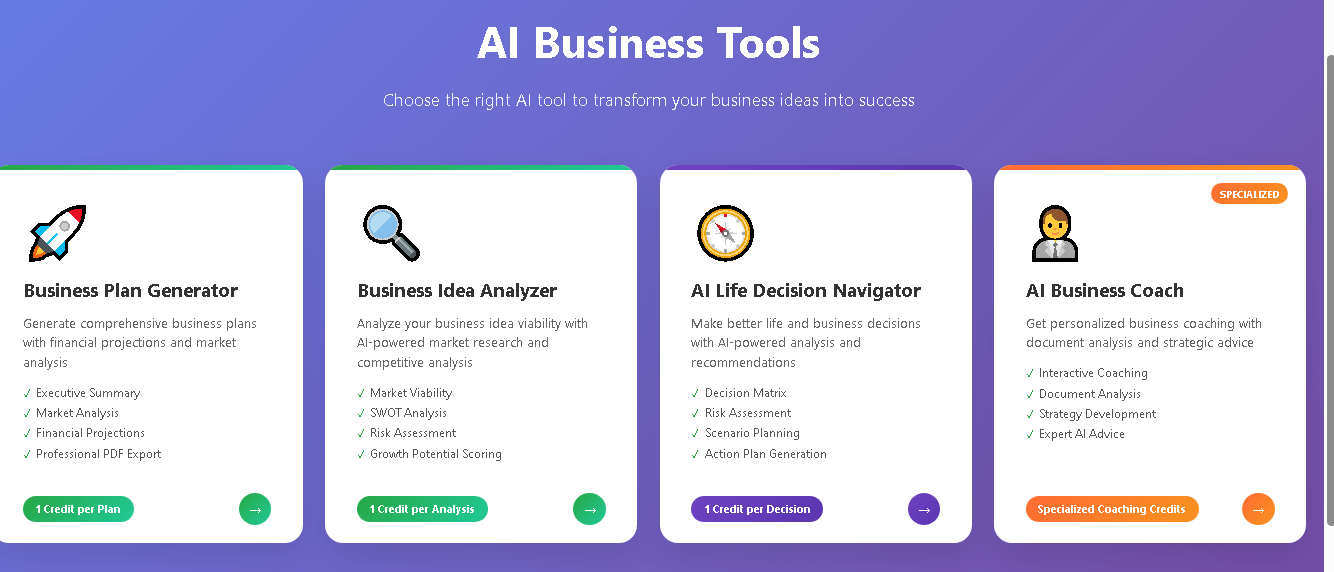
Car Dealership Business Plan Template | BizPlan AI Pro
Introduction: What Is a Car Dealership Business Plan Template?
A Car Dealership business plan template is a pre‑structured document that guides entrepreneurs through the process of turning a vision for an automotive sales operation into a realistic, fundable roadmap. Unlike generic business plan outlines, a dealership‑specific template incorporates the nuances of vehicle inventory, floorplan financing, state licensing, and the complex sales‑service‑parts ecosystem that defines the automotive retail sector. By using a tailored template, you can ensure that every critical element—from acquisition of new and used stock to compliance with the Federal Motor Carrier Safety Administration (FMCSA) and local dealer licensing boards—is addressed in a clear, investor‑ready format.
In addition to serving as a communication tool for lenders and partners, the template acts as an internal checklist. It forces you to quantify market demand, forecast cash flow under varying sales cycles, and outline risk mitigation strategies unique to the high‑value, high‑turnover nature of car sales. The result is a living document that not only secures capital but also steers day‑to‑day decision‑making as the dealership grows.
Key Sections of a Car Dealership Business Plan
1. Executive Summary
The executive summary condenses the entire plan into a compelling snapshot. It should highlight the dealership’s ownership structure, the specific market niche (e.g., new‑car franchise, certified pre‑owned, luxury imports), projected revenue, and the amount of capital required. Because investors often read only this section, include a clear value proposition—such as “offering the region’s first electric‑vehicle (EV) showroom with on‑site fast‑charging and a subscription‑based maintenance program.”
2. Market Analysis & Competitive Landscape
Deeply research the local automotive market, focusing on:
- Population demographics and average household income.
- Vehicle ownership trends (e.g., rising demand for SUVs or EVs).
- Competing dealerships within a 30‑mile radius and their brand affiliations.
- Online car‑buying platforms that could affect foot traffic.
Use this data to justify your chosen location and inventory mix. Include a SWOT analysis that reflects industry‑specific challenges such as fluctuating manufacturer incentives and supply‑chain disruptions.
3. Location, Facility & Showroom Design
Choosing the right lot size, building layout, and service bays is critical. Consider zoning regulations, proximity to major highways, and visibility from high‑traffic corridors. A well‑designed showroom can increase average transaction value by up to 12 % according to the National Automobile Dealers Association (NADA).
4. Inventory & Procurement Strategy
Detail how you will source new vehicles from manufacturers, acquire used stock through auctions, trade‑ins, or wholesale channels, and manage floorplan financing. Explain your inventory turnover targets (e.g., 45‑day average for new cars, 30‑day for used) and the technology platform you’ll use for real‑time stock visibility.
5. Sales & Marketing Plan
Outline both traditional and digital tactics:
- Local radio and billboard campaigns targeting specific ZIP codes.
- Search engine marketing (SEM) focused on “buy [brand] in [city]”.
- Social‑media showroom tours and influencer partnerships for EV models.
- Customer‑relationship‑management (CRM) workflows that nurture leads from inquiry to delivery.
Include measurable KPIs such as cost‑per‑lead, conversion rate, and average gross profit per unit.
6. Operations & Staffing Model
Map out the organizational chart, from General Manager down to sales consultants, finance managers, service technicians, and parts specialists. Define key performance indicators for each role (e.g., units sold per salesperson, service hours billed per technician). Discuss the use of dealership management systems (DMS) that integrate sales, service, parts, and accounting.
7. Financial Projections & Funding Requirements
Provide a three‑year forecast covering:
- Projected unit sales (new, used, trade‑in).
- Gross profit margins by vehicle type.
- Operating expenses (rent, utilities, payroll, advertising, floorplan interest).
- Cash‑flow analysis showing the timing of dealer‑floorplan drawdowns and repayments.
Conclude with the total capital needed, broken down by start‑up costs, working capital, and contingency reserves.
8. Legal, Licensing & Compliance
Operating a Car Dealership requires a suite of permits and registrations:
| Requirement | Issuing Authority | Typical Timeline |
|---|---|---|
| Dealer License (New or Used) | State Department of Motor Vehicles | 30‑60 days |
| Sales Tax Permit | State Revenue Department | 7‑14 days |
| Floorplan Financing Agreement | Manufacturer or Third‑Party Lender | 15‑30 days |
| Zoning & Signage Approval | Local Planning Department | 45‑90 days |
| Environmental Impact Assessment (if required) | State Environmental Agency | 60‑120 days |
Include a compliance calendar that tracks renewal dates for the dealer license, insurance coverage (garage liability, workers’ compensation), and annual franchise fees if you operate under a manufacturer brand.
9. Risk Management & Contingency Planning
Identify industry‑specific risks such as:
- Sudden shifts in manufacturer incentives or warranty policies.
- Supply‑chain bottlenecks causing inventory shortages.
- Regulatory changes affecting emissions standards.
- Economic downturns that reduce consumer financing capacity.
Outline mitigation tactics, including diversified inventory (mix of new, certified pre‑owned, and used), flexible floorplan terms, and a reserve cash fund equal to at least three months of operating expenses.
Financial Snapshot: Typical Startup Costs for a Car Dealership
| Cost Category | Low‑End Estimate (USD) | High‑End Estimate (USD) |
|---|---|---|
| Real Estate (lease or purchase) | 250,000 | 1,200,000 |
| Renovation & Showroom Build‑out | 150,000 | 800,000 |
| Initial Vehicle Inventory (floorplan drawdown) | 500,000 | 3,000,000 |
| Dealer Management System (DMS) & IT | 30,000 | 120,000 |
| Licensing & Legal Fees | 15,000 | 45,000 |
| Marketing Launch Campaign | 20,000 | 100,000 |
| Working Capital (3‑month operating buffer) | 200,000 | 600,000 |
| Insurance (garage liability, inventory) | 25,000 | 80,000 |
| Total Startup Capital Required | 1,190,000 | 5,945,000 |
How to Use & Customize Your Car Dealership Business Plan: Step‑by‑Step Guide
Step 1: Conduct a Hyper‑Local Market Study
- Gather demographic data from the U.S. Census Bureau for your target radius.
- Analyze vehicle registration trends using state DMV reports.
- Interview local consumers to uncover unmet needs (e.g., lack of EV service bays).
- Map competitor locations and note their brand mix, price points, and service offerings.
Document findings in a market‑analysis worksheet that will feed directly into the “Market Analysis” section of the plan.
Step 2: Define Your Dealership Model and Brand Alignment
- New‑Car Franchise – Requires manufacturer franchise agreement, higher floorplan commitments, and adherence to brand standards.
- Certified Pre‑Owned (CPO) – Leverages manufacturer‑backed warranties, often paired with a limited new‑car inventory.
- Independent Used‑Car Lot – Greater flexibility in sourcing, but higher marketing spend to build trust.
- Specialty Niche – Examples include luxury imports, electric‑vehicle only, or off‑road trucks.
Select the model that best matches the market gaps identified in Step 1, then tailor the “Inventory & Procurement” and “Sales & Marketing” sections accordingly.
Step 3: Build a Robust Financial Model
Use a spreadsheet that links the following components:
- Unit sales forecast → Gross profit per unit → Total gross profit.
- Floorplan interest rate × average inventory days → Financing expense.
- Fixed overhead (rent, salaries, utilities) + variable costs (advertising, parts) → Total operating expense.
- Revenue – Operating expense = EBITDA; subtract depreciation and tax to derive net profit.
Run sensitivity scenarios (e.g., 10 % drop in sales, 2 % increase in interest rates) to demonstrate resilience to lenders.
Step 4: Draft Each Section Using the Template
Copy the pre‑written headings from the Car Dealership business plan template, then populate them with data gathered in the previous steps. Keep language concise, use bullet points for readability, and embed charts or graphs where they illustrate trends (e.g., a line chart of projected monthly cash flow).
Step 5: Review, Refine, and Seek Expert Feedback
- Proofread for industry‑specific terminology (e.g., “floorplan,” “holdback,” “dealer‑installed accessories”).
- Ask a certified accountant familiar with automotive finance to verify the financial statements.
- Consult a dealership attorney to ensure licensing and franchise compliance sections are accurate.
- Incorporate feedback, then create a polished PDF version for investor presentation.
Step 6: Present to Investors, Lenders, or Franchise Representatives
When meeting with potential funders, focus on three pillars:
- Market Opportunity: Demonstrate demand with hard data.
- Profitability Path: Show clear break‑even timeline (typically 12‑18 months for a well‑stocked franchise).
- Risk Mitigation: Highlight contingency reserves and diversified inventory strategy.
Provide the executive summary as a handout, and be prepared to dive into the detailed sections if asked.
Frequently Asked Questions About Starting a Car Dealership and Writing Its Business Plan
What are the minimum legal requirements to open a car dealership?
You must obtain a state dealer license, a sales‑tax permit, and a surety bond (usually ranging from $10,000 to $100,000 depending on the state). Additionally, you need a physical lot that meets zoning ordinances, signage approval, and compliance with the Federal Trade Commission’s Used Car Rule if you sell pre‑owned vehicles.
How much capital is typically needed to launch a new‑car franchise?
Initial capital varies widely, but most manufacturers require a minimum net worth of $500,000 to $1 million, plus a liquid cash reserve of $250,000 to $500,000. The startup cost table above provides a more granular breakdown, with total capital ranging from $1.2 million to $6 million depending on location, size, and brand.
What financing options are available for dealership floorplan inventory?
| Financing Option | Key Features | Typical Interest Rate | Pros | Cons |
|---|---|---|---|---|
| Manufacturer Floorplan | Direct line of credit from the automaker | Rates vary by lender, product and borrower profile | Often includes promotional rebates; easy integration with DMS. | Stringent sales quotas; limited to that manufacturer’s models. |
| Bank Floorplan Loan | Traditional term loan secured by inventory | Rates vary by lender, product and borrower profile | Flexibility to finance multiple brands. | Requires strong credit history; longer approval time. |
| SBA 7(a) Loan | Government‑backed loan for small businesses | Rates vary by lender, product and borrower profile | Lower down‑payment requirements; longer repayment terms. | Complex application; caps on loan amount. |
| Private Investor / Equity | Capital in exchange for ownership stake | N/A | No debt service; strategic partners may bring industry expertise. | Dilutes ownership; investors may demand control provisions. |
| Illustrative only — funding amounts, rates and terms vary by lender, product, borrower profile, geography and date. This is not a quote or an offer; confirm current terms directly with the lender or program. | ||||
How do I calculate the break‑even point for a car dealership?
The break‑even point (in units) is calculated by dividing total fixed costs by the contribution margin per vehicle:
Break‑Even Units = Fixed Costs ÷ (Average Selling Price – Variable Cost per Unit)
Fixed costs include rent, salaries, insurance, and floorplan interest. Variable costs encompass vehicle acquisition price, dealer holdback, and any reconditioning expenses. For example, with $1.5 million in fixed costs, an average selling price of $30,000, and a variable cost of $27,000, the contribution margin is $3,000, yielding a break‑even volume of 500 units.
What are the most effective marketing channels for a new dealership?
Data from NADA shows that a blended approach works best:
- Search Engine Optimization (SEO): Ranking for “buy [brand] in [city]” drives organic leads.
- Pay‑Per‑Click (PPC) Advertising: Immediate visibility for high‑intent keywords.
- Local Partnerships: Sponsorship of community events and rideshare programs builds brand trust.
- Customer Referral Programs: Incentivize satisfied owners to refer friends; referral sales often have a 20 % higher gross profit.
- Service‑First Marketing: Promote service specials to bring customers onto the lot, increasing upsell opportunities.
Do I need a separate business plan for the service department?
While the main dealership plan should include a high‑level overview of service operations, many investors require a supplemental service‑department plan. This document details labor rates, parts inventory turnover, technician staffing ratios, and projected service‑gross‑profit (SGP) percentages. Including it demonstrates a diversified revenue stream and can improve overall financing terms.
How often should the business plan be updated?
Review and revise the plan at least semi‑annually. Key triggers for an update include:
- Significant changes in inventory mix (e.g., adding an EV line).
- Major shifts in financing rates or floorplan terms.
- Acquisition of additional locations or franchised brands.
- Regulatory updates affecting emissions testing or consumer protection.
Regular updates keep the plan aligned with market realities and maintain credibility with lenders.
Frequently Asked Questions
What is a Car Dealership business plan template?
It is a pre‑structured document that guides entrepreneurs in creating a detailed, fundable roadmap for starting and operating a car dealership, covering inventory, financing, licensing, and sales‑service‑parts.
Why do I need a specialized template for a car dealership?
A specialized template addresses industry‑specific factors like floorplan financing, state licensing requirements, and the integrated sales‑service‑parts model that generic templates overlook.
What key sections should be included in a car dealership business plan?
Essential sections include market analysis, inventory management, floorplan financing strategy, licensing and compliance, sales and service operations, marketing plan, and financial projections.
How does the template help secure funding?
It presents a clear, data‑driven roadmap with realistic financial forecasts and risk assessments, making it easier for lenders and investors to evaluate and fund the dealership.
Can the template be customized for different dealership types?
Yes, it can be adapted for new‑car, used‑car, franchise, independent, or multi‑brand dealerships by adjusting sections like inventory mix, supplier agreements, and branding strategies.