AI Business Plan Template : Top 5 Templates
Understanding the Importance of Templates in Business Planning
Templates serve as essential tools in the business planning process, providing structured frameworks that streamline the creation of comprehensive plans. They help entrepreneurs and businesses outline their objectives, strategies, and financial forecasts in a clear and organized manner. Utilizing a template can enhance clarity, focus, and efficiency, leading to more effective communication with stakeholders.
The Role of Templates in AI-Powered Business Plan Generators
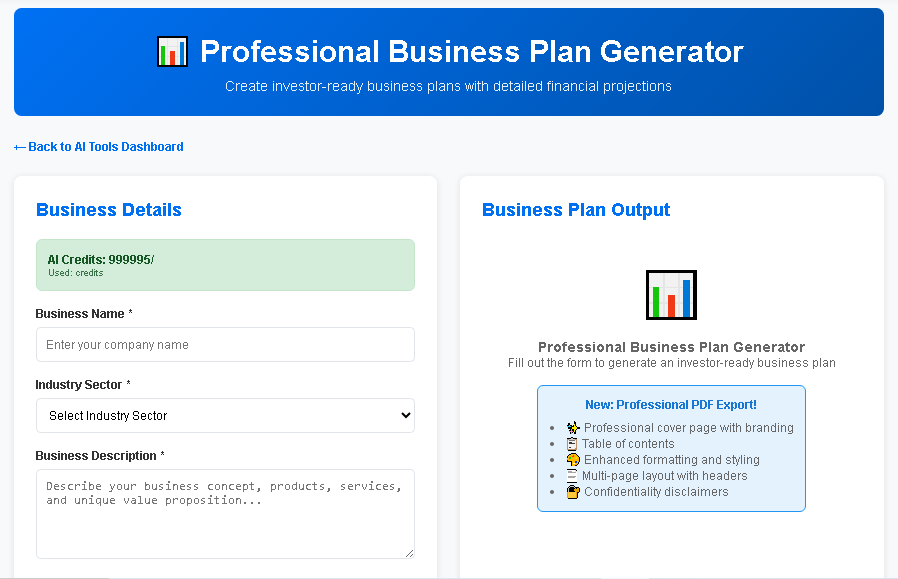
AI-powered business plan generators leverage templates to facilitate the planning process. These templates are designed to incorporate essential elements such as executive summaries, market analyses, operational plans, and financial projections. By employing a template, users can ensure that all critical components of a business plan are addressed systematically, reducing the likelihood of oversight.
Key Features of Templates in Business Planning Tools
- Pre-Designed Structure: Templates provide a pre-defined format that guides users through the necessary sections of their business plan, making it easier to organize thoughts and ideas.
- Customizability: Many templates allow for customization, enabling users to modify sections to better fit their unique business needs while maintaining a professional look.
- Guidance and Prompts: Templates often include prompts and examples that help users understand what information is needed in each section, which is especially beneficial for first-time entrepreneurs.
- Consistency: Using a template ensures that the business plan maintains a consistent tone and style, which is crucial for presenting a professional image to investors and stakeholders.
- Time Efficiency: Templates significantly reduce the time required to create a business plan, allowing users to focus on content rather than formatting.
Types of Templates Available for Business Plans
There are various types of templates available that cater to different business needs and industries. Understanding the specific type of template that aligns with your business goals can enhance the effectiveness of your plan.
1. Standard Business Plan Templates
These templates cover all the fundamental sections needed in a traditional business plan. They are ideal for startups and established businesses seeking funding or strategic partnerships.
2. Lean Startup Templates
Lean startup templates focus on concise business plans that emphasize essential elements such as value propositions, customer segments, and revenue streams. They are perfect for entrepreneurs looking to test ideas quickly and efficiently.
3. Pitch Deck Templates
Designed for presentations, pitch deck templates help entrepreneurs summarize their business plans visually. These templates are crucial for securing investor interest and communicating ideas succinctly.
4. Financial Projection Templates
Financial projection templates focus on the numerical aspects of a business plan, allowing users to create detailed financial forecasts, budgets, and cash flow analyses. These templates are essential for businesses seeking investment.
Utilizing Templates Effectively
To maximize the benefits of templates in business planning, it is important to follow practical strategies that enhance their effectiveness.
1. Choose the Right Template
Select a template that aligns with your specific business type and goals. Consider the audience for your business plan and the level of detail required.
2. Customize to Reflect Your Brand
While templates provide a foundation, it is crucial to infuse your brand’s personality and voice into the document. Customize sections to highlight your unique value proposition and market positioning.
3. Focus on Clarity and Conciseness
Ensure that the content within the template is clear and concise. Avoid jargon and overly complex language to make the document accessible to all stakeholders.
4. Regularly Update the Template
Business plans are dynamic documents. Regularly review and update the template to reflect changes in the business environment, market conditions, and strategic direction.
5. Seek Feedback
Before finalizing your business plan, seek feedback from mentors, advisors, or colleagues. Fresh perspectives can help identify areas for improvement and enhance the overall quality of the plan.
Advantages of Using Templates in Business Planning
The advantages of utilizing templates in business planning extend beyond mere convenience. Here are some key benefits:
1. Improved Organization
Templates help organize thoughts and ideas systematically, making it easier to navigate through complex information. This structured approach can lead to more coherent business plans.
2. Enhanced Credibility
A professionally formatted business plan instills confidence in investors and stakeholders. Templates help ensure that the final document meets industry standards and expectations.
3. Increased Productivity
By reducing the time spent on formatting and structuring, templates allow users to allocate more time to content development, strategic analysis, and research, ultimately boosting productivity.
4. Accessibility and Collaboration
Many templates are available online and can be easily shared with team members or advisors. This accessibility facilitates collaboration and ensures that all stakeholders can contribute to the planning process.
Conclusion
In conclusion, templates are invaluable assets in the business planning process. They provide structured frameworks that enhance organization, clarity, and professionalism in business plans. By leveraging the features of AI-powered business plan generators and understanding the various types of templates available, entrepreneurs can create compelling, investor-ready business plans efficiently. Emphasizing the customization and regular updating of templates can further enhance their effectiveness, ensuring that they remain relevant and aligned with evolving business objectives.
Frequently Asked Questions
What is a business planning template?
A business planning template is a pre-designed structure that helps entrepreneurs organize key elements like objectives, strategies, and financial forecasts into a clear and professional business plan.
Why are templates important in business planning?
Templates provide a structured framework that enhances clarity, focus, and efficiency in creating a business plan, making it easier to communicate with stakeholders.
Can using a template save time?
Yes, templates streamline the planning process by offering ready-made sections and guidelines, reducing the time needed to develop a comprehensive plan from scratch.
Are templates customizable?
Yes, most templates are designed to be flexible and customizable, allowing users to tailor them to fit the unique needs and goals of their business.
Where can I find a good business plan template?
You can find reliable business plan templates from business websites, planning software, or professional resources like consulting firms and government economic development sites.