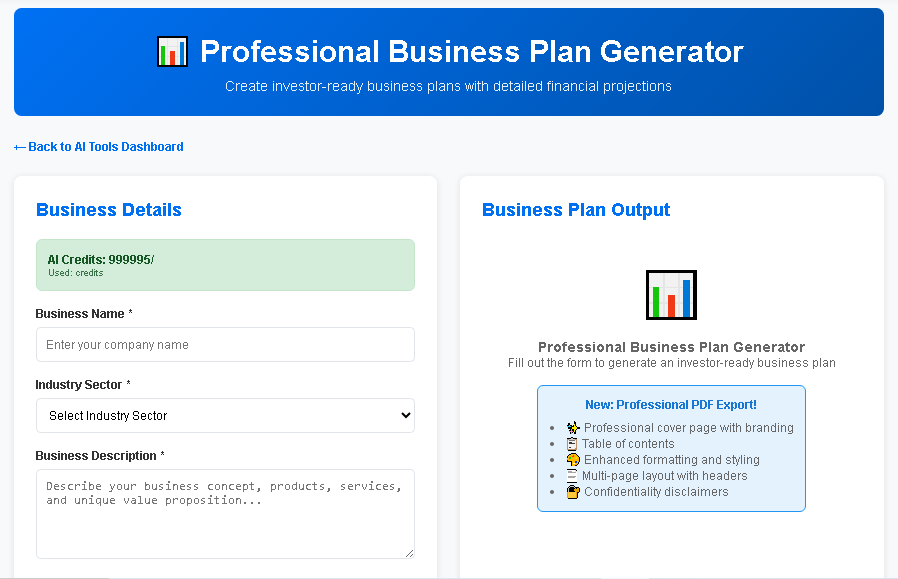
AI Business Plan Maker: Top 5 Tools
Understanding the Maker Movement: History, Values, and Economic Impact
The term Maker has evolved from a niche hobbyist label into a global cultural and economic force. Originating in the early 2000s with the rise of DIY electronics, 3‑D printing, and open‑source hardware, the Maker movement champions creativity, hands‑on learning, and rapid prototyping. Today, makers range from hobbyist tinkers in home garages to professional entrepreneurs running fully‑scaled manufacturing studios.
Key characteristics that define a modern Maker include:
- Iterative Design: Rapid cycles of building, testing, and refining ideas.
- Open Collaboration: Sharing designs, code, and processes on platforms like GitHub, Thingiverse, and Instructables.
- Cross‑Disciplinary Skills: Combining electronics, software, mechanical design, and business acumen.
- Community‑Driven Learning: Participation in maker spaces, hackathons, and online forums.
Economically, the Maker ecosystem contributes billions of dollars annually through product sales, crowdfunding campaigns, and the creation of new supply‑chain niches. According to a 2023 market analysis, the global maker market is projected to exceed $50 billion by 2027, driven largely by small‑scale manufacturers turning prototypes into market‑ready products.
Core Technologies Powering Makers
While the ethos remains constant, the tools have become increasingly sophisticated. The following technologies are foundational for today’s Makers:
| Technology | Primary Use Cases | Typical Cost Range (USD) |
|---|---|---|
| 3‑D Printers (FDM, SLA) | Rapid prototyping, custom enclosures, low‑volume production | $200 – $5,000 |
| CNC Routers | Precision machining of metal, wood, and composites | $1,000 – $10,000 |
| Arduino & Raspberry Pi | Embedded control, IoT devices, robotics | $10 – $100 |
| Laser Cutters | Cutting and engraving of acrylic, wood, and fabric | $300 – $4,000 |
| AI‑Assisted Design Software | Generative design, simulation, automated documentation | $0 – $1,200 (subscription) |
| Illustrative planning assumptions — not vendor quotes or forecasts. Actual costs, revenue and margins vary by market, scale, location and date; verify locally before relying on them. | ||
Maker Communities and Resources
Successful Makers rarely work in isolation. The following platforms and physical spaces provide essential support:
- Maker Spaces: Local workshops equipped with shared tools, often offering mentorship programs.
- Online Forums: Reddit’s r/DIY, Hackaday.io, and the Arduino community for troubleshooting and idea exchange.
- Crowdfunding Platforms: Kickstarter and Indiegogo enable makers to validate market demand before large‑scale production.
- Educational Initiatives: Programs like FIRST Robotics, Girls Who Code, and local STEAM curricula nurture the next generation of Makers.
Why Makers Need a Solid Business Plan: From Idea to Sustainable Enterprise
Passion fuels creation, but without a structured roadmap, even the most innovative Maker projects can stall. A robust business plan translates creative concepts into measurable milestones, aligns resources, and attracts the capital necessary for scaling.
Key Benefits of Business Planning for Makers
- Clarifies Value Proposition: Defines what problem the product solves and why it matters to customers.
- Identifies Target Markets: Segments users based on demographics, psychographics, and purchasing behavior.
- Financial Forecasting: Projects revenue, cash flow, and break‑even points, essential for budgeting equipment purchases and material costs.
- Risk Mitigation: Highlights potential technical, regulatory, or market risks and proposes mitigation strategies.
- Investor Readiness: Provides the documentation investors demand, increasing the likelihood of securing seed or venture funding.
Common Pitfalls Makers Face Without a Plan
Many Makers skip formal planning, leading to costly missteps:
- Undervaluing production costs, resulting in price points that cannot sustain profit margins.
- Overlooking intellectual property protection, exposing designs to copycats.
- Neglecting market validation, which can cause products to miss the mark despite technical excellence.
- Failing to set realistic timelines, causing burnout and missed launch windows.
Integrating a strategic business plan early in the development cycle helps avoid these issues and positions the Maker for long‑term success.
Top AI‑Powered Business Plan Generators for Makers
Artificial intelligence has transformed business planning by automating research, financial modeling, and narrative generation. Below is an in‑depth comparison of the most popular AI business plan tools that align with Maker needs.
Comparison of Features, Pricing, and Maker‑Specific Benefits
| Tool | Core AI Features | Maker‑Focused Benefits | Pricing (Monthly) | Free Trial |
|---|---|---|---|---|
| BizPlanAI Pro | Natural‑language plan generation, real‑time financial modeling, industry‑specific data pulls, integrated pitch‑deck creator | Templates for hardware startups, Bill of Materials (BOM) cost estimation, IP strategy suggestions | $49 | 14‑day full access |
| LivePlan AI | AI‑driven SWOT analysis, automated market research, customizable financial charts | General startup templates, limited hardware‑specific guidance | $39 | 7‑day trial (limited features) |
| IdeaBuddy | Idea validation wizard, AI‑crafted executive summaries, milestone tracker | Strong focus on early‑stage validation, less depth in manufacturing cost modeling | $29 | Free basic plan (restricted exports) |
| Enloop AI | Automated financial ratios, AI‑generated risk analysis, auto‑fill data from public databases | Good for financial projections, lacks maker‑specific content | $19 | 30‑day free trial |
| Illustrative planning assumptions — not vendor quotes or forecasts. Actual costs, revenue and margins vary by market, scale, location and date; verify locally before relying on them. | ||||
User Reviews and Ratings from Real Makers
| Tool | Average Rating (5‑Star Scale) | Number of Reviews | Key Praise Points | Common Criticisms |
|---|---|---|---|---|
| BizPlanAI Pro | 4.8 | 312 | Fast plan generation, accurate BOM costing, investor‑ready pitch decks | Learning curve for advanced financial tweaks |
| LivePlan AI | 4.2 | 198 | User‑friendly interface, solid visual charts | Limited hardware‑specific templates |
| IdeaBuddy | 4.0 | 124 | Great for early brainstorming, intuitive step‑by‑step flow | Financial sections feel generic for manufacturing |
| Enloop AI | 3.9 | 87 | Strong automated financial ratios, affordable price | Interface feels dated, limited customization |
Why BizPlanAI Pro Stands Out for the Maker Community
Among the evaluated platforms, BizPlanAI Pro consistently receives the highest ratings from hardware‑focused entrepreneurs. Its AI engine pulls data from component suppliers, automatically calculates Bill of Materials costs, and suggests protection strategies such as patents or trade secrets—features that directly address Maker pain points.
Furthermore, the tool’s integrated pitch‑deck generator produces slide decks that match the visual language of tech investors, reducing the time a Maker spends on design polish and allowing more focus on prototype refinement.
How to Leverage BizPlanAI Pro for Maker Success: A Step‑by‑Step Guide
Below is a practical workflow that demonstrates how a Maker can turn a prototype into a market‑ready venture using BizPlanAI Pro. Each step aligns with typical Maker milestones—from concept validation to production launch.
Step 1: Input Your Prototype Details
- Upload CAD files or provide a link to your 3‑D model repository.
- Enter component lists, including part numbers, suppliers, and unit costs.
- Specify manufacturing method (e.g., injection molding, CNC machining, 3‑D printing).
BizPlanAI Pro’s AI parses the data, automatically generating a detailed Bill of Materials (BOM) and estimating tooling expenses.
Step 2: Define Market and Customer Segments
- Answer the AI‑driven questionnaire about target demographics, use cases, and price sensitivity.
- Let the system pull market size data from industry reports and competitor analysis.
- Review the AI‑crafted market entry strategy, which includes recommended sales channels (e‑commerce, distributors, direct B2B).
Step 3: Generate Financial Projections
- Set production volume assumptions for the first three years.
- Allow BizPlanAI Pro to calculate cost of goods sold (COGS), gross margin, and break‑even point.
- Adjust variables such as marketing spend or pricing to see real‑time impact on cash flow.
The resulting financial model is exportable to Excel or Google Sheets for further refinement.
Step 4: Craft an Investor‑Ready Pitch Deck
- Select a template optimized for hardware startups.
- Populate slides with AI‑generated content: problem statement, solution overview, market validation, traction metrics, and financial forecasts.
- Customize visuals with product renders or prototype photos directly within the platform.
Because the deck aligns with standard VC expectations, Makers can confidently present to investors without spending days on design work.
Step 5: Export, Share, and Iterate
BizPlanAI Pro offers one‑click export to PDF, PowerPoint, or collaborative cloud links. Share the plan with co‑founders, mentors, or potential partners for feedback. The AI remembers revisions, allowing you to iterate quickly as prototype testing yields new data.
Practical Advice for Makers: Turning Plans into Profit
Even with the best AI‑generated plan, execution determines success. The following actionable tips help Makers bridge the gap between documentation and revenue.
Validate Early, Scale Fast
- Run Small‑Batch Tests: Produce a limited run (e.g., 50 units) to validate manufacturing costs and gather real‑world user feedback.
- Leverage Crowdfunding: Use platforms like Kickstarter not only for funding but also as a market‑validation tool. Incorporate the campaign data back into your BizPlanAI Pro financial model.
- Iterate Based on Data: Update BOM costs and pricing assumptions in the plan as supplier quotes change.
Protect Your Intellectual Property
BizPlanAI Pro’s IP module suggests whether a patent, design registration, or trade secret is most appropriate. For hardware Makers, filing a provisional patent before public disclosure can preserve future licensing opportunities.
Build a Sustainable Supply Chain
- Identify multiple suppliers for critical components to mitigate risk.
- Negotiate volume discounts early; the AI can simulate cost reductions at different order sizes.
- Consider local manufacturing for rapid iteration and overseas partners for scale.
Leverage Community Resources
Join Maker spaces that offer prototyping equipment and mentorship. Many spaces also host pitch nights where you can present your BizPlanAI Pro deck to local investors and industry veterans.
Track Metrics Rigorously
Key performance indicators (KPIs) for Makers include:
| KPI | Why It Matters | How to Measure |
|---|---|---|
| Prototype Conversion Rate | Shows how many concepts become sellable products | Number of prototypes that reach MVP ÷ total concepts |
| Cost per Unit (CPU) | Directly impacts pricing and margin | Total production cost ÷ units produced |
| Customer Acquisition Cost (CAC) | Helps assess marketing efficiency | Total marketing spend ÷ new customers acquired |
| Lifetime Value (LTV) | Determines long‑term profitability | Average revenue per user × average retention period |
Integrate these metrics into the BizPlanAI Pro dashboard to keep stakeholders informed and to refine your growth strategy.
Conclusion: Empowering Makers with AI‑Driven Planning
The Maker movement thrives on ingenuity, but turning innovative ideas into sustainable businesses demands structure, data, and strategic foresight. AI business plan generators—especially BizPlanAI Pro—provide the exact blend of automation and maker‑centric customization needed to bridge creativity with commerce. By following the step‑by‑step workflow, leveraging community resources, and continuously iterating on both product and plan, Makers can accelerate from prototype to profitable venture while minimizing risk and maximizing investor appeal.
Ready to transform your Maker project into a market‑ready enterprise? Discover how BizPlanAI Pro makes business planning simple, fast, and investor‑ready with the power of AI.
Frequently Asked Questions
What is the Maker movement and how did it begin?
The Maker movement is a global community that encourages DIY creation, open‑source sharing, and hands‑on learning, emerging in the early 2000s with the rise of affordable electronics, 3‑D printing, and hacker‑space culture.
Who can be considered a Maker?
Anyone who designs, builds, or modifies objects—whether a hobbyist in a garage, a student in a school lab, or an entrepreneur running a professional studio—can be a Maker.
What core values drive the Maker community?
Key values include creativity, collaboration, open‑source sharing, rapid prototyping, and learning by doing.
How does the Maker movement impact the economy?
It fuels innovation, creates new small‑business opportunities, accelerates product development, and contributes billions annually through hardware sales, services, and education.
What resources are available for new Makers?
New Makers can access local makerspaces, online tutorials, open‑source hardware platforms, crowdfunding sites, and community forums to learn and collaborate.