Introduction: Why Business Plan AI Generators Matter

Starting a business is exciting, but creating a solid business plan can feel overwhelming. That’s where business plan AI generators come in – they’re changing the game for entrepreneurs everywhere. These tools help transform ideas into investor-ready documents without the headache of starting from scratch.
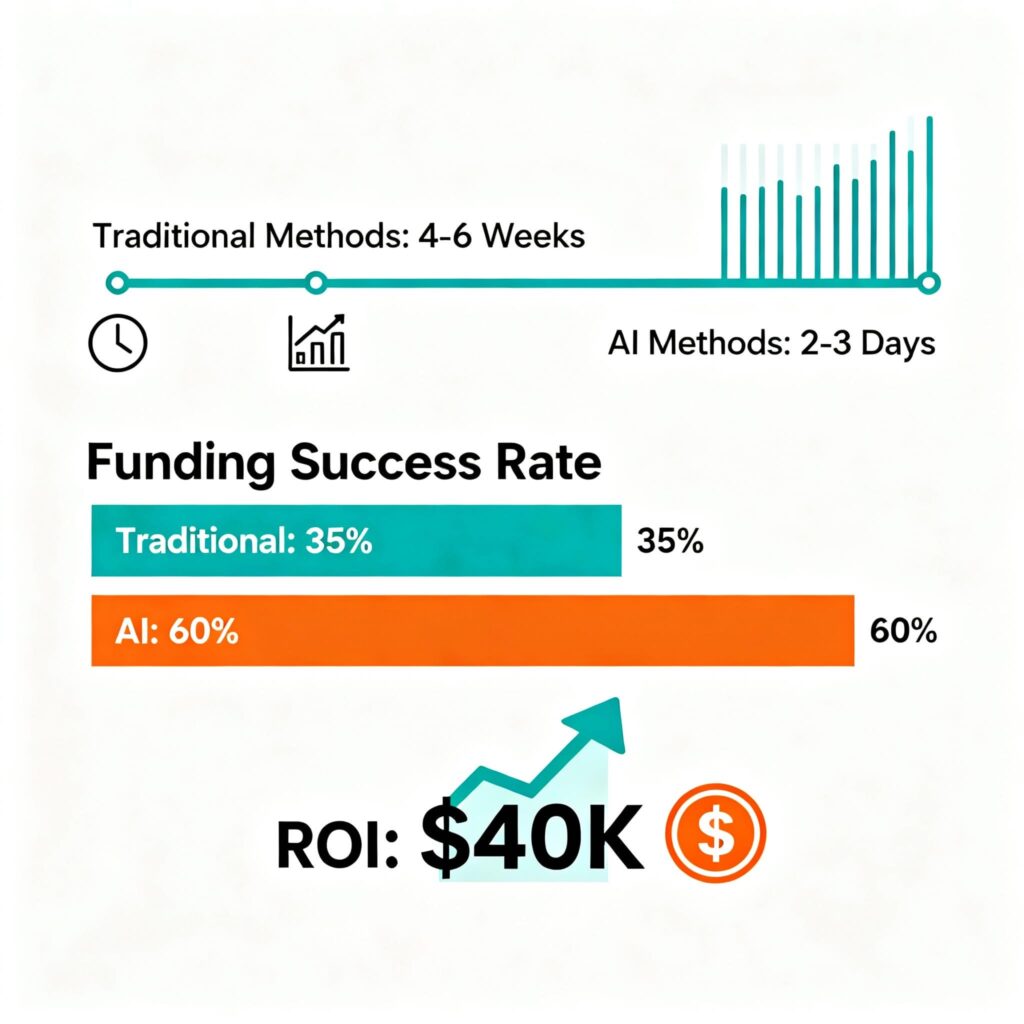
In today’s fast-paced startup world, time is precious. Writing a traditional business plan can take weeks or even months. AI tools cut this down to hours or days, giving founders more time to focus on building their actual business.
But the question remains: Do these AI-generated plans work when securing real funding? Can investors tell the difference? And most importantly, can they help you get the money you need to launch your dream business?
In this blog post, we’ll dive into a real-life case study of how one entrepreneur used an AI business plan generator to secure $40,000 in startup funding. You’ll see exactly how they did it, step by step, with all the challenges and victories along the way.
Overview: What is a Business Plan AI Generator?
A business plan AI generator is a software tool that uses artificial intelligence to create comprehensive business plans based on information you provide. These tools typically ask questions about your business idea, target market, financial projections, and other key details. The AI then processes this information to generate a professionally formatted business plan.
Unlike templates that provide a structure for you to fill in, AI generators actively help craft the content. They can:
- Suggest market analysis based on current industry data
- Create financial projections based on your inputs
- Recommend competitive positioning strategies
- Generate executive summaries that highlight your business’s unique value
- Format the entire document to professional standards
Most AI business plan generators offer different service tiers, from basic free versions to premium options with more features like financial modeling, pitch deck creation, and ongoing business advice.
The best part? You don’t need an MBA or business background to create a compelling business plan. The AI guides you through the process with simple questions anyone can answer.

Case Study Introduction: The $40K Funding Journey Step-by-Step
Meet Sarah, a first-time entrepreneur passionate about sustainable fashion. After working in retail for five years, she developed an idea for an eco-friendly clothing subscription box service called “GreenThreads.” The concept was solid, but Sarah had no experience writing business plans or pitching to investors.
Sarah aimed to secure $40,000 seed funding to cover initial inventory, website development, and six months of operating expenses. With limited savings and no business education, she turned to an AI business plan generator to help formalize her idea.
Her journey from idea to funded business took approximately three months and included:
- 2 weeks researching and gathering information about her market
- 3 days using the AI business plan generator to create her initial plan
- 2 weeks refining the AI-generated content
- 1 month networking and identifying potential investors
- 3 weeks pitching to investors and angel groups
- 2 weeks finalizing funding terms with her eventual investor
By the end of this process, Sarah secured exactly what she needed: a $40,000 investment from a local angel investor specializing in sustainable businesses. The investor later admitted that Sarah’s business plan’s professionalism and thoroughness initially caught their attention.
Now, let’s break down exactly how she did it.
Walkthrough: Using the AI Generator (with screenshots/examples)
Sarah chose BusinessPlanAI (a pseudonym for this case study) after comparing several options. She selected it for its user-friendly interface and focus on sustainability-oriented businesses. Here’s how she navigated the process:
Step 1: Initial Setup and Business Description
Sarah began by creating an account and selecting “Subscription Box Service” from the business model templates. The AI immediately customized its questions to this specific business type.
The first section asked for a basic business description. Sarah entered:
- Business name: GreenThreads
- Business concept: Monthly subscription box of curated eco-friendly clothing items
- Mission statement: “To make sustainable fashion accessible and convenient for environmentally conscious consumers”
The AI then generated an expanded business description, which Sarah refined with her specific vision.
Step 2: Market Analysis
This section was imposing. After Sarah entered her target demographic (environmentally conscious women ages 25-40), the AI pulled recent market research data showing:
- Market size: $3.2 billion for sustainable fashion in the US
- Growth rate: 9.8% annually
- Consumer trends: Increasing preference for sustainable products, subscription model growth
Sarah supplemented this with local market information specific to her launch city.
Step 3: Financial Projections
The AI asked detailed questions about Sarah’s expected costs and revenue streams:
- Subscription price points: $49/month basic, $79/month premium
- Cost of goods: Average $22 per box
- Operating expenses: Fulfillment, marketing, website maintenance
- Startup costs: Inventory, website development, marketing launch
From this information, the AI generated three-year financial projections including:
- Monthly cash flow forecasts
- Break-even analysis (projected at month 14)
- Profit and loss statements
- Return on investment calculations
Step 4: Plan Customization and Refinement
After generating the initial plan, Sarah refined it. The AI allowed her to regenerate specific sections while keeping others. She focused particularly on:
- Strengthening the executive summary based on the full plan
- Enhancing the competitive analysis section with specific local competitors
- Adding more detail to her marketing strategy
The final document was 22 pages, professionally formatted with an attractive design incorporating GreenThreads’ brand colors and styling.

Investor Perspective: Feedback on the AI-Generated Plan
Sarah’s eventual investor, Michael, a local angel investor with a portfolio of sustainable businesses, provided valuable feedback about why the AI-generated plan stood out:
“What immediately impressed me was the cohesiveness of the plan. Unlike many first-time entrepreneurs, Sarah’s document flowed logically and addressed all the key areas I look for. The financial projections were realistic rather than overly optimistic, which is refreshing to see.”
Michael highlighted specific strengths of the AI-generated plan:
- Comprehensive market analysis with current data
- Clear articulation of the value proposition
- Detailed customer acquisition strategy
- Realistic financial projections with clear assumptions
- Well-defined use of funds section
When Sarah later revealed that she’d used an AI tool to help create the plan, Michael was surprised but not concerned: “The tool clearly helped organize your thoughts and present them professionally, but your business knowledge and passion came through clearly. That’s what ultimately matters.”
Michael noted that he could tell Sarah had customized the AI output and added her insights, making it more credible than if she had generated and submitted the plan without personalization.
Challenges & Lessons Learned
Despite the success, Sarah encountered several challenges when using the AI business plan generator:
Challenge 1: Generic Industry Information
The AI sometimes provided generic information about the fashion industry rather than specifics about sustainable fashion or subscription models. Sarah had to research and add this specialized information herself.
Lesson: AI gives you a framework, but you still need to add industry-specific knowledge and personalization.
Challenge 2: Financial Assumptions
The initial financial projections used standard industry metrics that didn’t align with Sarah’s business model. The customer acquisition costs were particularly unrealistic for her niche market.
Lesson: Always review and adjust financial projections based on your specific business model and market conditions.
Challenge 3: Investor Questions
During pitches, investors asked detailed questions that went beyond what was covered in the plan. Sarah had to quickly learn more about certain aspects of her business that the AI hadn’t prompted her to consider.
Lesson: Use the AI-generated plan as a starting point, then anticipate investor questions by seeking feedback from mentors or advisors before pitching.
Tips for Securing Funding with AI Tools
Based on Sarah’s experience, here are practical tips for using AI business plan generators to secure funding:
1. Don’t Just Generate and Go
Take time to customize and personalize the AI output. Investors can spot generic content, and your unique insights add credibility and demonstrate your expertise.
2. Validate with Real Data
Supplement the AI-generated market analysis with your own research. Specific, current data about your target market strengthens your case dramatically.
3. Get Feedback Before Pitching
Share your AI-generated plan with mentors, advisors, or even friends in business. Their feedback will help you identify gaps or areas that need strengthening.
4. Know Your Plan Inside Out
Study every aspect of your plan, especially the financial projections. Being able to explain the reasoning behind each number builds investor confidence.
5. Be Honest About Your Process
If asked, be transparent about using AI tools. Frame it as leveraging technology to create a professional document while focusing on building your business – most investors will respect this efficient approach.
Downloadable Resources & Templates
To help you on your own funding journey, we’ve created these resources based on Sarah’s experience:
- AI Business Plan Checklist: Ensure your AI-generated plan includes all essential elements investors look for
- Financial Assumptions Worksheet: Customize the AI’s financial projections with your own realistic numbers
- Investor Q&A Template: Prepare for common investor questions about your AI-generated plan
- AI Customization Guide: Learn which sections of the AI plan need the most human customization
- Funding Pitch Deck Template: Create a presentation based on your AI-generated business plan
These resources are available for download at the end of this article. They will help you maximize the effectiveness of your AI-generated business plan.

Conclusion: Key Takeaways and Next Steps
Sarah’s journey from business idea to $40,000 in funding demonstrates that AI business plan generators can be powerful tools for entrepreneurs – when used correctly. The key takeaways from her experience include:
- AI tools dramatically reduce the time needed to create a professional business plan
- Personalization and customization of the AI output are essential for credibility
- The structure and comprehensiveness of AI-generated plans can impress investors
- You still need to understand every aspect of your plan to pitch it successfully
- The combination of AI efficiency and human insight creates the strongest plans
If you’re considering using an AI business plan generator to secure funding, start by researching the available tools and selecting one specializing in your industry. Gather as much information about your business concept and market as possible before beginning, and plan to spend significant time refining the AI output.
Remember that the business plan is just the beginning. The real work comes in executing your vision and building the business you’ve described. But with a solid, AI-assisted plan, you’ll be well-positioned to secure the funding you need to get started.
Have you used an AI business plan generator? We’d love to hear about your experience in the comments below!